You do everything you need to set your business up for success, like hiring good employees, keeping supplies stocked, and staying on top of day-to-day operations. Still, there are often a few overlooked areas that can make a bigger difference than expected. One of the most critical aspects is whether your business is ready for an unexpected medical emergency.
Sudden cardiac arrest can happen anywhere, including the workplace. Which is why, as a business owner or manager, it’s important to understand the requirements for your industry and know the answer to: Is having an AED just a best practice, or is it actually required by law?
In this blog, we’ll help you understand the potential legal requirements certain industries may face and what your business should do to stay prepared and protected.
What Is an AED and Why Does It Matter?
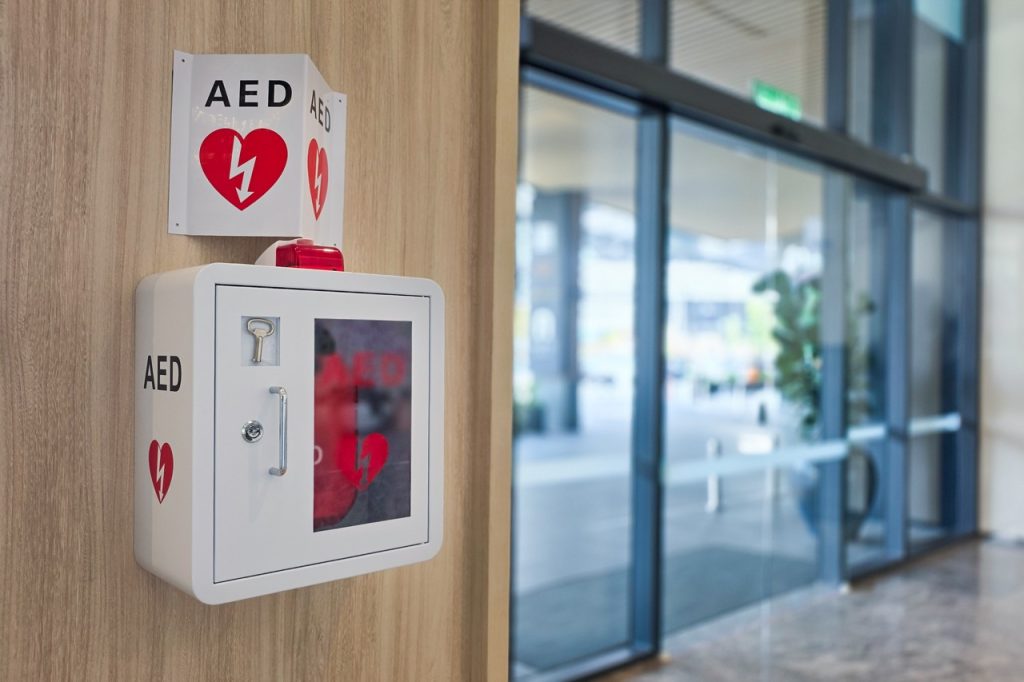
AED stands for Automated External Defibrillator. An AED is a life-saving medical device that administers an electric shock to help restore a person’s normal heart rhythm during a cardiac arrest. AEDs are designed to be used by anyone by providing clear and easy-to-follow prompts.
Read our Guide to Automated Defibrillators to learn more about how they work.
Having an AED (Automated External Defibrillator) onsite and easily accessible in your business is an important investment in preparedness. Prompt and proper administration of medical support to someone experiencing a sudden cardiac arrest can significantly improve their chances of survival until medical professionals arrive.
In fact, the American Heart Association (AHA) reports that “immediate CPR and use of an AED can double, or even triple, survival rates”.
Are AEDs Required by Law in the Workplace?
AEDs are not required by federal law in every workplace, but depending on your state, industry, and facility type, your place of business may be subject to mandates and regulations that require them.
Industries and Locations Where AEDs Are Commonly Required
As we’ve established, not all businesses require having an AED on site; however, certain industries more commonly do so than others. This is particularly true in high-traffic areas, and community spaces are essential for ensuring public safety.
Here are some industries and locations where AEDs are commonly required:
- Healthcare facilities
- Construction sites
- Schools and universities
- Fitness centers and gyms
- Government buildings
- Airports and large transportation hubs
- Large public venues (stadiums, arenas, event spaces)
AED Laws Differ by State
To understand the state AED laws, it’s good to know that the requirements can really differ from one state to another. Some places actually require you to register your AED, and even keep up with regular maintenance checks to make sure it’s always ready to go.
We recommend checking the regulations specific to your area.
Should Your Business Have an AED Even If It’s Not Required?
Even if your business type does not require you to have an AED, it’s a good idea to have one. Consider it the smart, responsible decision and not just checking a legal checkbox. It can be especially wise for businesses that serve the public and have high foot traffic. Other situations could be having staff or employees with known health risks that could increase their odds of experiencing a medical emergency. As previously mentioned, quickly administering an AED can significantly improve survival rates.
Why Every Workplace Should Offer Group CPR Training
How to Implement an AED In Your Business
1. Purchase AED Units:
Buy one or more Automated External Defibrillators (AEDs) based on the size of your business.
2. Proper Installation:
Ensure the AED unit is properly installed and placed in a clearly visible location.
3. Staff Training:
After informing your staff of the newly installed AEDs and their location, provide proper training on CPR, Basic Life Support (BLS), and the use of the AED.
4. Routine Maintenance:
Plan for regular maintenance and checks to ensure the AED is functioning properly.
Purchase an AED for your Business
Liability Protection and Good Samaritan Laws
Many people worry about what could go wrong when using an AED. This is a common concern, but knowing about Good Samaritan laws can help ease those fears. Good Samaritan laws protect individuals who help in emergencies, like using an AED or providing CPR. You won’t face legal issues if you act in good faith and without serious mistakes.
This means if you or one of your employees helps someone during a cardiac emergency, you’re usually protected if things don’t go as planned. It’s also important to have proper training and to keep the AED well maintained, as this reduces the chances of problems. When you and your staff know where the AEDs are located and how to use them, you can handle emergencies more effectively.
How to Organize CPR and First Aid Training for Your Employees
How Training Supports Your Emergency Preparedness Plan
Being familiar with an AED, how it works and where it is located within your business or workplace is just one piece of the puzzle when it comes to an emergency preparedness plan. Simply having an AED onsite isn’t enough, preparing your team and organization with proper training can make all the difference in the unthinkable scenario that an employee, coworker, customer or another individual goes into cardiac arrest or experiences another medical emergency in your business.
Schedule AED, CPR and First Aid Training for Business with HeartCert
Knowing how an AED works is an important first step, but hands-on CPR and AED training can help you feel even more prepared to respond quickly and confidently in an emergency. HeartCert offers easy-to-complete, comprehensive CPR and first aid training so you can learn the skills, build your confidence and be prepared to act in the event of an emergency.
AED requirements vary, but preparedness shouldn’t.
At HeartCert, we want businesses and individuals to be informed, confident and empowered to take action in the event of a medical emergency. In addition to AED and CPR training, we offer first aid, basic-life support (BLS), OSHA compliance training and more. Our emergency response trainings prepare you for more than just using equipment like an AED; it equips you to respond to real-life events.
Not sure where to start? HeartCert can help.
Contact us to learn more about AED programs and training options.
Sources:
America Heart Association AED Fact Sheet
https://www.aed.com/aed-legislation
HeartCert is your trusted training partner for CPR, ACLS, PALS, EMR, First Aid, CNA, TMA, IV, EKG and more, throughout the United States.
Courses include CPR/AED/First Aid, Basic Life Support (BLS), Advanced Cardiac Life Support (ACLS), Pediatric Advanced Life Support (PALS), Certified Nursing Assistant training, IV training, EKG training, babysitter basics and more. Courses and certifications from both the American Heart Association and American Red Cross are available. We offer virtual courses and certifications, in all 50 states as well as in-person classes at our headquarters, HeartCert CPR Eagan and major cities in Iowa, Illinois, Michigan, Minnesota, Missouri, Mississippi, Nebraska, Pennsylvania, Texas and Wisconsin.