• Skip to primary navigation
  • Skip to main content
  • Skip to footer
  • Latest News
  • Contact Us
  • Store
  • Main Site
  • 651-261-2314
HeartCert CPR Duluth MN

HeartCert CPR Duluth MN

AHA CPR for the public and healthcare providers

  • Individuals
    • Nursing/CNA
    • CPR/AED/First Aid
    • BLS
    • EKG Training
    • Babysitter training
  • Nursing/CNA
  • Organizations
  • Virtual Training
    • CPR/AED/First Aid
    • BLS Healthcare Provider Courses
    • Advanced Life Support Courses
    • PALS Provider Courses
    • EKG Training
    • Babysitter training
  • About Us

tims

Why Teachers and School Staff Need More Than a First Aid Kit

1 week ago by tims

A First Aid kit is a great start for teachers and school staff to have on hand, but it only covers basic injuries and minor emergency situations. In a school setting, faculty is responsible for hundreds of kids. If a more serious emergency comes up, it’s imperative that staff knows how to handle it. Especially when they are the only adult in a classroom. That’s why teachers and school staff need more than a First Aid kit—they need to learn CPR to handle the big stuff if and when it happens.

A smiling teacher sits at the front of a brightly lit classroom, showing a numbered grid on a piece of paper to a diverse group of young students seated at desks.

Why Should Teachers and Staff Get CPR-Certified in Schools

Getting teachers and staff CPR-certified in schools is one of the most important things you can do. With so many people under one roof, the odds are higher that something could happen, whether it’s in the classroom, at lunch, during an after-school program, or in the school swimming pool. No matter the environment, an emergency can happen at any time—and it’s important to be prepared.

What Common Emergencies Does CPR Cover That First Aid Doesn’t?

Many schools think that only a few caretakers need to be CPR-certified to fill the need: medical personnel and staff who deal with common care challenges (like coaches and special needs aids). However, emergencies can happen at any time to anyone of any age. Whether it’s a child or adult in your school, accidents and one-off cases can happen.

While First Aid covers the basics, CPR fills in the blanks. Some of the common emergencies that may occur in a school setting include:

  • Cardiac arrest in a student or staff member
  • Severe choking, drowning, or blocked airways
  • Anaphylactic shock (the EpiPen is often with the school nurse)
  • Drowning in a nearby body of water or swimming pool
  • Extreme falls, head trauma, electrical shock, etc.
  • Drug overdose or food poisoning
  • Severe asthma attacks

There are a ton of uncommon emergency situations that can and will happen. It’s when staff and teachers aren’t prepared when they happen that it’s a problem. While First Aid covers the minor emergencies, CPR helps cover more dangerous situations.

Related Content: What’s the Difference Between CPR and First Aid?

Who Should Be CPR-Certified in Schools?

A smiling teacher wearing glasses leans over a table to engage with young children who are building with colorful wooden blocks in a vibrant preschool classroom.Some of the most common staff members to get CPR-certified are the school nurse and coaches. However, any caretaker or teacher who is handling children should get certified for the utmost protection. Anything could happen in a classroom, and every second counts when a child or another adult goes into cardiac arrest. Even sending someone down the hall for help wastes precious time that could save someone.

According to Very Well Health, CPR must be started in the first two minutes to increase the chances of survival and reduce brain damage. If it doesn’t happen right away, hypoxia and severe damage can happen, resulting in:

  • Amnesia and memory loss
  • Involuntary muscle contractions
  • Incontinence
  • Impaired speech
  • Personality changes
  • Disorientation

When more teachers and school staff are educated on what to do in an emergency and get CPR-certified, it can literally save lives in schools—of both adults and students—when something happens.

Related Content: Why Coaches Should Learn CPR Before the Season Starts

Where to Get Teachers and School Staff CPR-Certified

If your teachers and school staff aren’t currently CPR-certified and you’d like them to be prepared in emergencies, our team at HeartCert offers group training. During these group lessons, we’ll cover:

  • First Aid basics and treatments
  • CPR training for adults, children, and infants
  • Recognizing symptoms of cardiac arrest
  • How to perform life-saving techniques
  • And more

Sign up today, and we’ll set up a date to come to you and ensure your teachers and school staff have the knowledge they need to handle emergencies and save a life.

Sign Up for CPR Group Training

HeartCert is your trusted training partner for CPR, ACLS, PALS, EMR, First Aid, CNA, TMA, IV, EKG and more, throughout the United States.

Courses include CPR/AED/First Aid, Basic Life Support (BLS), Advanced Cardiac Life Support (ACLS), Pediatric Advanced Life Support (PALS), Certified Nursing Assistant training, IV training, EKG training, babysitter basics and more. Courses and certifications from both the American Heart Association and American Red Cross are available. We offer virtual courses and certifications, in all 50 states as well as in-person classes at our headquarters, HeartCert CPR Eagan and major cities in Iowa, Illinois, Michigan, Minnesota, Missouri, Mississippi, Nebraska, Pennsylvania, Texas and Wisconsin.


Filed Under: CPR, News Tagged With: American Heart Association, CPR, CPR Certification, CPR course, CPR training, First Aid, first aid course, first aid training, group training, HeartCert, HeartCert CPR, school, teachers

What’s the Difference Between Hands-Only CPR and Traditional CPR Training

1 month ago by tims

Knowing the difference between hands-only CPR and traditional CPR training seems like a minute detail in the grand scheme of saving someone’s life, but if you plan on getting certified, it’s an important distinction. Today, we’re going to explain the difference between hands-only CPR and traditional CPR training, explain how they work and when to use each method, and who to use it on for the most effective results.

An overhead view of a CPR training session. One person demonstrates chest compressions on an adult mannequin equipped with AED pads, while another person operates a training AED device nearby.

What’s the Difference Between Hands-Only CPR and Traditional CPR?

While traditional CPR involves both assisted breath work and chest compressions when someone goes into cardiac arrest, hands-only CPR is only chest compressions. In an emergency, hands-only CPR is just as effective as traditional CPR when started immediately. In fact, the National Library of Medicine concludes that compression-only CPR is better than standard CPR when cardiac arrest occurs outside of a hospital setting. The reason for it is simple: any CPR is better than no CPR.

Related Content: Why Every Caregiver Should Be CPR Certified

Why Compression-Only CPR is Better in Some Situations

Most bystanders are hesitant to use mouth-to-mouth resuscitation on a stranger. However, people are way more likely to utilize compression-only CPR on someone they don’t know. In a medical emergency when someone goes into cardiac arrest, any CPR counts.

While traditional CPR with mouth-to-mouth is most effective in infants and children or when someone is suffocating or drowning, hands-only CPR is a valuable alternative to no response. When someone’s heart stops beating, they have mere minutes until brain damage becomes irreversible—unless they get oxygen flowing again in their body. That’s where CPR—any CPR—comes in handy.

For the first few minutes, there’s already some oxygen left in the body, so compression-only CPR works fine in most teens and adults. Meanwhile, in children, infants, and elderly individuals, mouth-to-mouth helps give them oxygen they might not have. Traditional CPR also works better in emergencies that involve suffocation or drowning, due to the lack of oxygen from the start.

Overall, any CPR is better than no CPR in an emergency that involves cardiac arrest.

Related Content: Practical Ways to Practice CPR Skills at Home

Comparing Hands-Only CPR vs. Traditional CPR

The major difference between hands-only CPR and traditional CPR is whether assisted breathing is included. However, there’s a time and a place for when to use the method and who to use it on.

Hands-Only CPR vs. Traditional CPR


Hands-Only

Traditional

Technique

Basic life-saving method and starting point in learning for general public

More advanced; taught through in-person and online classes

Effectiveness

Just as effective as traditional CPR in the first few minutes

More effective in adding more oxygen and circulating it

How it works

Chest compressions push oxygen throughout the body to keep vital organs alive until help comes

Combines chest compressions with breaths to provide additional oxygen and push it throughout the body

When to use it

When someone is in cardiac arrest

When someone is in cardiac arrest; better choice for children, suffocation, or drowning

Who it can be used on

Adults and teenagers

Anyone: infants, children, teens, adults, elderly, etc.

What to do

Call 911; push hard and fast in the center of the chest

Learn CPR with a local class or online training


How to Perform Hands-Only CPR

In hands-only CPR, the American Heart Association specifies that there are only two steps to save a life when someone goes into cardiac arrest:

  • Call 911
  • Push hard and fast

When you first notice that someone isn’t breathing or their heart stops, the very first thing you should do is call 911. This step is crucial as the person in cardiac arrest will always need further medical treatment, and you can only give CPR for so long before exhausting yourself.

Next, you’ll want to use two hands (one placed over the other) to give firm, deep compressions (two inches in) on the center of their chest at a rate of 100 to 120 per minute. Keep up with this until help arrives or as long as physically possible.

How to Perform Traditional CPR

Get Certified for Traditional CPR

If you’re ready to learn traditional CPR to save someone’s life in an emergency, HeartCert CPR has everything you need to get started. We offer basic and advanced classes throughout the Midwest to prepare you for emergencies. Whether you’re continuing education in a clinical setting or if you simply want to learn to save a life, our classes offer in-person, online, and hybrid options to help you get started.

Register Today For Your Spot

HeartCert is your trusted training partner for CPR, ACLS, PALS, EMR, First Aid, CNA, TMA, IV, EKG and more, throughout the United States.

Courses include CPR/AED/First Aid, Basic Life Support (BLS), Advanced Cardiac Life Support (ACLS), Pediatric Advanced Life Support (PALS), Certified Nursing Assistant training, IV training, EKG training, babysitter basics and more. Courses and certifications from both the American Heart Association and American Red Cross are available. We offer virtual courses and certifications, in all 50 states as well as in-person classes at our headquarters, HeartCert CPR Eagan and major cities in Iowa, Illinois, Michigan, Minnesota, Missouri, Mississippi, Nebraska, Pennsylvania, Texas and Wisconsin.


Filed Under: CPR, News Tagged With: American Heart Association, CPR, CPR Certification, CPR course, CPR training, First Aid, first aid course, first aid training, HeartCert, HeartCert CPR

CPR Training Options: In-Person vs Virtual vs Kiosk

2 months ago by tims

If you’ve decided to get CPR certified, your next question is likely, Which type of training should I choose? Today’s CPR courses offer more flexibility than ever. From traditional classroom instruction to online learning and even modern self-service kiosks, they all provide different benefits. At HeartCert CPR, we are proud to be an industry leader in CPR and First Aid training courses, with all of these training methods available for our students. Each type of training has its unique advantages and considerations, and it’s helpful to know what to expect with each so you can determine which is ideal for you. Here’s what to know before signing up.

in person CPR training with instructor and student holding laptop for online instruction

How CPR Training Has Evolved

According to the American Heart Association, more Americans than ever are confident in their ability to provide life-saving CPR. This is a positive outcome, and at HeartCert, we are committed to making CPR training accessible to all to continue to make strides toward every individual being trained and confident in their ability to provide life-saving support in the event of an emergency.

CPR training has evolved over the years, and programs have changed to meet the increased demand and need for easy, flexible training, with in-person classes, virtual options, and self-service kiosks making certification easier to fit into busy schedules. Whether you’re getting certified for work, renewing your credentials, or simply wanting to be prepared for an unexpected emergency, there are more ways than ever to learn life-saving skills.

Find out more about how technology is changing CPR and First Aid Training

Option 1: Traditional In-Person CPR Training

What Happens During an In-Person Class?

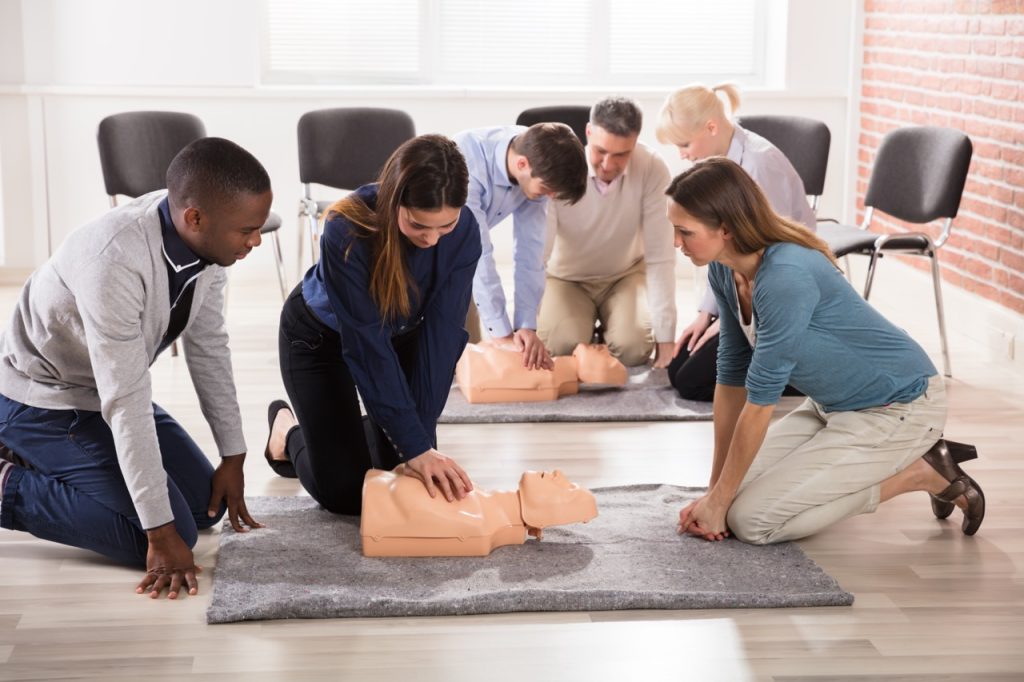
During an in-person CPR training class, a certified instructor leads the educational portion and guides students through hands-on practice and skills testing. Students are able to ask questions and receive feedback in real time.

Who Typically Chooses This Option?

Hands-on in-person CPR training can be a good fit for any individual, but they are especially common for:

  • Healthcare workers
  • Businesses and organizations
  • Teachers and childcare providers
  • Individuals who learn best through hands-on experience
  • Individuals taking CPR training for the first time

Biggest Benefits of This Format

In-person CPR training has many benefits that can help improve how people learn. Participants build confidence by practicing hands-on, which helps them use their skills in real-life situations. Instructors provide direct guidance and give immediate feedback, making it easier to understand important techniques. This type of training also meets many workplace requirements, so individuals are ready for emergencies and follow safety rules. Overall, in-person training creates a supportive environment that helps people master critical life-saving skills.

Option 2: Virtual CPR Training

How Online CPR Classes Work

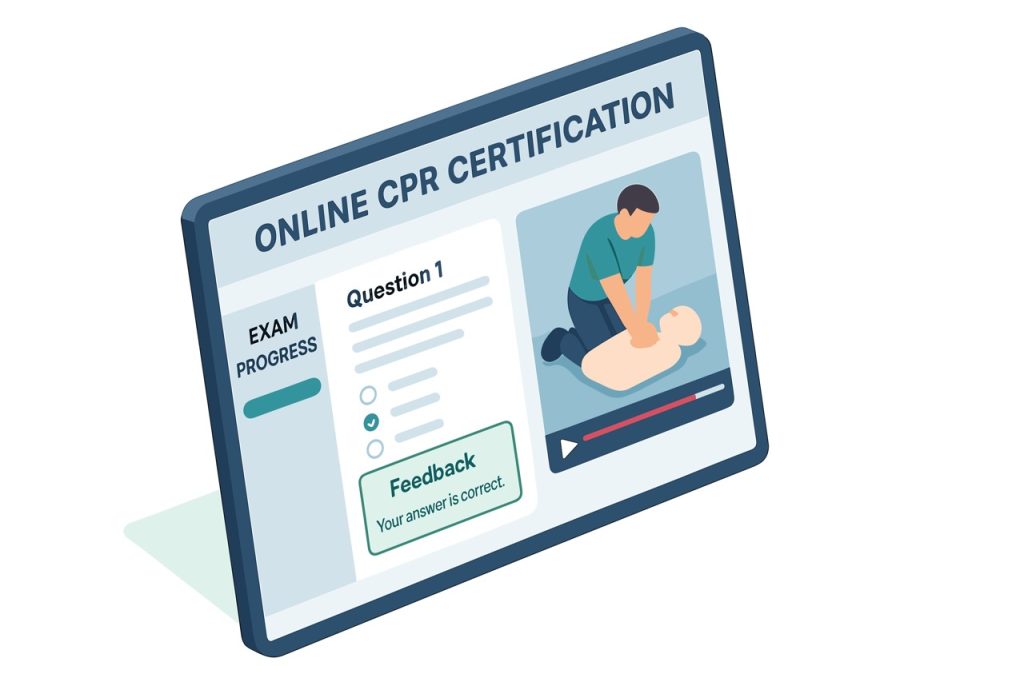
Online CPR and first aid classes are available in two main formats: self-paced courses featuring interactive videos and learning modules, or live instruction conducted via video streaming platforms such as Zoom. These courses typically include knowledge checks throughout the training. In some cases, you may also need to schedule an in-person skills assessment at the end of your training.

When you enroll with HeartCert’s online CPR training, we actually ship everything you need to complete your course in the convenience of your own home. Our online CPR and First Aid class includes a manikin and supplies so you can test your skills virtually with an approved American Heart Association or American Red Cross instructor to obtain your official 2-year certificate.

Find out more about HeartCert’s At-home CPR Training Options 

Who Typically Chooses This Option?

Hands-on in-person CPR training can be a good fit for any individual, but they are especially common for:

  • Busy professionals
  • Parents and family caregivers
  • Anyone looking for scheduling flexibility
  • Individuals renewing their expiring CPR certification

How Often Should I Renew My CPR Certification?

Biggest Benefits of This Format

Virtual online CPR training offers numerous benefits for busy individuals wanting to obtain or renew their CPR certification. One of the most significant is that you can often learn from anywhere at any time, making it the most flexible training option available. Depending on the course format, you may be able to complete the coursework at your own pace, which can be helpful if you need to take breaks or when scheduled class times do not work for your schedule. Another benefit is that you may be able to easily access course materials to review during and after your training is complete.

Option 3: CPR Certification Kiosks

What Is a CPR Kiosk?

A CPR kiosk is a self-service training station that lets you complete CPR certification in a flexible, on-demand format that usually combines digital instruction with hands-on skills practice.

With this unique training option, you can obtain your CPR certification by scheduling a time to stop by one of HeartCert’s participating locations at a time that works for your schedule and take a guided CPR course with our innovative CPR Certification Station.

How Does HeartCert’s CPR Certification Station Work?

The process to obtain your CPR certification at our CPR kiosks is straightforward and simple.

  1. Schedule a time on our website that works for you.  
  2. Take the instruction portion of the CPR training on the touchscreen monitor.  
  3. Connect with a live instructor online to ask any questions.  
  4. Complete your skills test using the manikins, which give real-time feedback.  
  5. Get your 2-year American Red Cross certification card.

How HeartCert’s Self-Service Kiosk Makes CPR Certification Easy and Flexible

Who Typically Chooses This Option?

  • Those renewing certifications
  • People with busy and unpredictable schedules
  • Individuals and healthcare professionals needing a quick and convenient option
  • Those who want the simplicity of online learning and the confidence that comes from hands-on practice and real-time feedback

Biggest Benefits of this Format

The most significant benefits of taking your CPR training from a self-service kiosk are getting the ideal balance between independently led training and hands-on experience, which can really be the optimal learning experience for many individuals. Participants can access the program at times that work best for their schedules. This format also allows for fast completion and minimizes scheduling hassles, making it a convenient option for those looking to enhance their skills without the typical constraints of traditional training programs.

Questions to Ask Before Choosing a CPR Course

Asking yourself these questions when deciding which CPR course to take can help guide your decision.

Is the certification accepted by my employer?

If you are obtaining your certification as a requirement of your employer, be sure to confirm which type of certification you need and that the training you sign up for is sufficient.

Do I want instructor interaction?

Everyone learns differently and has a preference for an interaction level; ask yourself if having personal interaction with an instructor will help you learn better and feel more capable.

How important is schedule flexibility?

If in-person training seems challenging to fit into your schedule, more flexible options like online CPR training or CPR kiosk certification can be more accessible.

Do I need hands-on practice?

In-person instruction and hands-on learning can help to solidify your CPR learning and skills. It can be especially helpful if it is your first time taking CPR training and getting certified. For beginners, in-person classes and CPR kiosk certification are valuable experiences. On the other hand, individuals renewing their certification may feel confident completing an online course that does not include live hands-on practice.

Am I getting certified for the first time or renewing?

If it’s your first time taking a CPR training, you may feel that an in-person training provides the most opportunity to build your knowledge and lifesaving skillset.

Frequently Asked Questions

Is one CPR training method better than another?

Not necessarily. The best option depends on your goals, schedule, and certification requirements.

Can I become CPR certified completely online?

With HeartCert CPR’s online CPR training program, you can become fully CPR certified by taking our online course. Some certifications require an in-person hands-on skills assessment after your online training; however, with HeartCert CPR, you can complete your training fully online with our equipment delivery that allows you to test your skills wherever you are nationwide.

Are CPR kiosks a legitimate way to get certified?

Yes, CPR training kiosks are a legitimate way to obtain your CPR certification; many kiosks are affiliated with nationally recognized organizations.

Get CPR Certified Your Way with HeartCert CPR

There isn’t a single “best” way to learn CPR, only the method that best fits your needs. Whether you prefer the guidance of an instructor, the convenience of online learning, or the flexibility of a kiosk, getting certified is a step toward being ready when someone needs help. Whatever CPR training method is right for you, HeartCert CPR has you covered. Whether you choose in-person, online, or kiosk training, you will receive comprehensive instruction that provides you with the essential knowledge and skills needed to confidently respond in the event of cardiac arrest or a medical emergency.

Explore your CPR training options and find the certification method that works for your schedule and goals.

Register for CPR Training

Sources: 

https://newsroom.heart.org/news/more-americans-than-ever-are-confident-about-providing-lifesaving-cpr-new-survey-suggests


HeartCert is your trusted training partner for CPR, ACLS, PALS, EMR, First Aid, CNA, TMA, IV, EKG and more, throughout the United States.

Courses include CPR/AED/First Aid, Basic Life Support (BLS), Advanced Cardiac Life Support (ACLS), Pediatric Advanced Life Support (PALS), Certified Nursing Assistant training, IV training, EKG training, babysitter basics and more. Courses and certifications from both the American Heart Association and American Red Cross are available. We offer virtual courses and certifications, in all 50 states as well as in-person classes at our headquarters, HeartCert CPR Eagan and major cities in Iowa, Illinois, Michigan, Minnesota, Missouri, Mississippi, Nebraska, Pennsylvania, Texas and Wisconsin.


Filed Under: CPR, News Tagged With: American Heart Association, CPR, CPR Certification, CPR course, CPR training, First Aid, first aid course, first aid training, group training, HeartCert, HeartCert CPR

Onsite CPR Training Options for Businesses of Any Size

3 months ago by tims

Workplace safety looks different for every organization, but being prepared for a medical emergency should always be part of the plan. On-site CPR and first aid training can be a flexible and efficient way to equip your team with life-saving skills without disrupting daily operations.

Whether you’re managing a small office or a large facility, there are training options designed to fit your schedule, team size, and compliance needs.

person using mannequin for CPR and first aid course in office during workplace training

Why Choose On-site CPR Training

Offering employees on-site CPR and first aid training has numerous benefits. One of the biggest advantages for businesses is promoting workplace safety and fostering an environment where employees feel confident and empowered in the event of a medical emergency. Depending on your industry, there may even be some requirements for staff to hold current certifications.

When businesses regularly provide employees the opportunity to renew their CPR certification, it makes it easier for staff to complete training, lessens the likelihood of putting it off, eliminates the need for employees to find time and travel offsite, and makes it easier to schedule across multiple teams or shifts. When employers bring CPR and first aid training on-site at your business or locations, training can be tailored to your workplace environment. If your industry requires OSHA compliance, this can also be aligned with safety planning and training offerings.

4 Reasons to Offer CPR Training to Employees

Training Options Based on Business Size

Small Teams and Offices

For smaller businesses and groups, on-site CPR training can often be scheduled as a single class session. HeartCert’s CPR, AED and First Aid training with hands-on instruction is the perfect option that covers all necessary workplace safety.

Mid-Sized Businesses

Companies and organizations with multiple departments may also choose to offer one on-site CPR and First Aid training or they may benefit from staggered sessions or blended learning formats. This tailored approach can help minimize downtime while ensuring that all employees have the opportunity to attend and ensuring broader team coverage.

Large Organizations and Multi-Shift Operations

For larger teams and corporations, it can be ideal to provide emergency CPR and First Aid training across multiple days, shifts, or locations. Some providers, like HeartCert, can help HR managers design and offer scalable programs with dedicated instructors and structured rollout plans to train employees efficiently.

Available Course Types

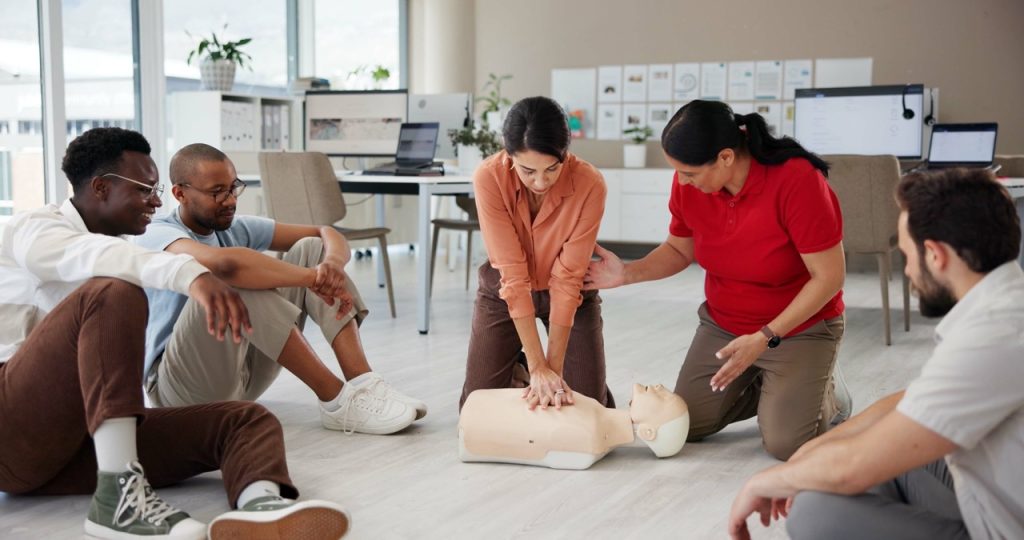
HeartCert CPR group CPR and first aid class in workplace conference room with employees on floor learning emergency life saving techniques

CPR and AED Certification

HeartCert offers both American Red Cross and American Heart Association CPR and AED certification courses. Our certification trainings cover adult, child, and infant CPR, along with proper AED use. Certifications are nationally recognized and valid for 2 years. Our CPR and AED certification course is ideal for general workplace preparedness.

First Aid Training

Part of proper preparedness for the workplace involves basic first aid training. HeartCert’s CPR and First Aid training focuses on skills to handle common workplace injuries such as burns, cuts, and allergic reactions.

What’s the Difference Between CPR and First Aid Training?

Combined Certification Courses

Many businesses choose bundled CPR, AED, and First Aid training for a more comprehensive approach. Not all training providers offer all, but HeartCert’s training program does.

BLS for Healthcare Providers

In addition to CPR and First Aid courses, HeartCert also offers Basic Life Support (BLS) training for those in the healthcare field. BLS is an advanced course designed for medical professionals who require a higher level of training, including team-based response scenarios.

Find out more about HeartCert’s BLS for Healthcare Providers

OSHA Compliance Courses

Many businesses are required to complete OSHA compliance training to help ensure their workplace meets safety standards and employees understand how to recognize and reduce common hazards. These courses can cover topics like injury prevention, proper equipment use, emergency procedures, and maintaining a safe work environment. For many organizations, OSHA training is an important part of building a safer, more prepared workplace and staying aligned with industry regulations.

Find out more about OSHA Compliance Courses

Flexible Training Formats

At HeartCert, we understand the importance of fast, effective and flexible training that can be easily integrated to accommodate your business and employees’ busy schedules. This is why we offer training that is tailored specifically to you and your organization’s needs.

In-Person On-site Training

We offer traditional instructor-led sessions with hands-on practice and real-time feedback. For larger organizations, we often offer multiple sessions, so employees have several options to choose from and create the least disruption to staff’s responsibilities and workdays.

Blended Learning Options

Another ideal option for busy workplaces, big and small, is our blended class options. These trainings combine online coursework completed upfront at the convenience of employees and paired with in-person skills testing afterward, which can help reduce time spent away from work. This can be especially helpful for businesses training large groups, where it can be a challenge to have much of your workforce participating in CPR and First Aid training at the same time.

How to Choose the Right Option For Your Company

CPR and First aid training for your company shouldn’t be a one-size-fits-all solution. It should be catered to your business and workforce. Several factors, including the number of employees, work schedules and shift structures, will all impact how the training should be provided to best fit your needs. In addition to schedules, industry requirements and compliance considerations will also determine what is necessary from your training program.

How to Organize CPR Training for Your Employees

For HR directors and staff coordinators planning CPR and First Aid training for your company, having an experienced training partner can streamline the experience for employees and your organization, resulting in better training outcomes.

Schedule CPR and First Aid Training for Your Business

Bring CPR training directly to your team and create a safer workplace with minimal disruption. Reach out to speak with our certified instructors and create a custom training program designed to fit your business, no matter your industry or size.

Plan CPR Training for your Buisness

HeartCert is your trusted training partner for CPR, ACLS, PALS, EMR, First Aid, CNA, TMA, IV, EKG and more, throughout the United States.

Courses include CPR/AED/First Aid, Basic Life Support (BLS), Advanced Cardiac Life Support (ACLS), Pediatric Advanced Life Support (PALS), Certified Nursing Assistant training, IV training, EKG training, babysitter basics and more. Courses and certifications from both the American Heart Association and American Red Cross are available. We offer virtual courses and certifications, in all 50 states as well as in-person classes at our headquarters, HeartCert CPR Eagan and major cities in Iowa, Illinois, Michigan, Minnesota, Missouri, Mississippi, Nebraska, Pennsylvania, Texas and Wisconsin.


Filed Under: CPR, News Tagged With: American Heart Association, CPR, CPR Certification, CPR course, CPR training, First Aid, first aid course, first aid training, group training, HeartCert, HeartCert CPR

10 Places You Can Work as a CNA (Besides a Nursing Home)

3 months ago by tims

When most people think of a Certified Nursing Assistant (CNA), they picture a nursing home setting. While that is a common initial path for this profession, it’s far from the only one. CNAs have opportunities across a wide range of healthcare environments and facilities, and each one looks a little bit different when it comes to job responsibilities, work pace, patient population, and daily experience.

In this blog, we’ll explore 10 places CNAs can work, with several of these career paths being commonly featured in resources like Indeed.

young woman CNA taking blood pressure of senior woman sitting on couch in home

10 Places to Work As a CNA

Adult Day Care Centers

Adult day care centers provide daytime support for adults who need supervision or assistance. The population could be seniors with limited mobility, memory loss or cognitive decline or individuals with disabilities. When working in an adult day care center, CNAs help with activities, meals, and basic health needs; this setting can be a great option for those seeking more predictable daytime hours.

Start Your CNA Career with HeartCert’s Stay and Train Program

Assisted Living Facilities

While assisted living facilities are similar to nursing homes, they typically have residents who are more independent than those in traditional nursing homes. In this type of environment, CNAs often assist with activities of daily living (ADLs), such as bathing and grooming, offer companionship, and provide light medical care or administer medications.

Complete Your TMA Training in Just 2 Weeks

Group of seniors spending free time in bright community room with big window at assisted living facility

Clinics and Physician Offices

Some medical clinics and doctors’ offices hire CNAs to assist with patient intake, basic procedures, exam room prep, and administrative tasks. Common workplaces include specialty clinics like orthopedics, gastroenterology, family planning, or even outpatient surgery centers, and urgent care clinics. Depending on the location, these settings can sometimes offer a lower-intensity environment and can be a great place to begin your career after obtaining your CNA certification.

Hospitals

Many people are surprised to learn that CNAs can play an important role in hospital settings, working alongside nurses and healthcare teams. Working in a hospital offers a fast-paced environment where CNAs have responsibilities like patient care, monitoring vital signs, and supporting registered nurses across departments such as emergency, surgery, and general care units. Working in a hospital is ideal for those who want more variety in their day-to-day work, greater hands-on experience and opportunities for career advancement.

CNA Certification: Open Doors in Your Healthcare Career

young man in blue scrubs holding tablet with doctor and another nurse in the background

In-Home Healthcare

Another employment option for certified nursing assistants includes working in home healthcare, where CNAs provide one-on-one care directly in a patient’s home. CNAs working to support patients in their home often look like providing personal care, medication reminders, and basic health monitoring. This option can offer more flexibility and a personalized approach to care.

Starting Your CNA Training: What to Know Before You Begin

Hospice Care

Hospice CNAs offer care and support to patients with serious or terminal illnesses, focusing on comfort and quality of life. This role requires compassion and emotional awareness, as the care they provide extends to both patients and their families. Working as a hospice CNA does require some additional training focused on providing end-of-life care to patients.

Rehabilitation Centers

Rehab facilities help individuals recover from injuries, surgeries, or serious illnesses. In this setting, CNAs will assist patients with mobility, recovery exercises, and daily care routines. CNAs will often work closely with physical and occupational therapy teams to ensure patients are progressing in their rehabilitation.

A Day in the Life of a CNA: What to Expect in This Rewarding Career

Schools and Educational Settings

CNAs may work in public and private schools, often assisting students who require one-on-one support or ongoing medical attention throughout the school day. CNAs may also work within a school nurse’s office, supporting the head nurse by providing daily healthcare assistance to students, monitoring those visiting the office, and helping manage routine health needs in an educational setting.

Travel CNA Opportunities

Although it’s not for everyone, travel CNA jobs can be a perfect fit for those wanting to explore new areas while they gain valuable experience in diverse employment settings. Travel CNA roles offer short-term assignments in different locations, and these positions can provide competitive pay and the chance to gain experience in diverse settings.

Veterans Healthcare Administration

Another rewarding place to work as a CNA is at the VA. Working with active and retired veterans can be fulfilling work for certified nursing assistants, especially for those with a passion for supporting those who have served our country. As a CNA working in a veterans healthcare facility, you’ll provide basic patient care, take vital signs, assist with other various clinic needs, and help ensure patients remain comfortable throughout their care.

Which Setting Is Right for You?

Choosing the right working environment as a CNA depends on your personal preferences, experience and whether you enjoy a fast pace, one-on-one care, or a more structured routine. Each career path offers valuable experience and opportunities to grow in the healthcare field. At HeartCert, we offer CNA training courses designed to prepare students to succeed in their healthcare career, no matter where they decide to work.

CNAs are consistently in high demand, meaning employment opportunities are plentiful and there are always new positions available for both those just starting out and those with experience in the field. One of the biggest advantages of becoming a CNA is the variety of environments you can work in, depending on your interests and career goals.

Get CNA Certified and Kickstart Your Career

Working as a CNA is a rewarding role that can set you up for a successful career in the healthcare industry. Many CNAs go on to continue their education and become registered nurses, building on the hands-on experience and patient care skills they develop as a certified nursing assistant.

At HeartCert, we provide comprehensive CNA training so individuals looking to pursue this line of work can be prepared and equipped to pass the state exam and clinicals and find employment quickly to begin their fulfilling career as a certified nursing assistant.

Ready to explore where your CNA certification can take you?

Start your training today and open the door to a wide range of rewarding career paths.

Explore Upcoming Classes

Sources: https://www.indeed.com/career-advice/finding-a-job/where-can-cnas-work 


HeartCert is your trusted training partner for CPR, ACLS, PALS, EMR, First Aid, CNA, TMA, IV, EKG and more, throughout the United States.

Courses include CPR/AED/First Aid, Basic Life Support (BLS), Advanced Cardiac Life Support (ACLS), Pediatric Advanced Life Support (PALS), Certified Nursing Assistant training, IV training, EKG training, babysitter basics and more. Courses and certifications from both the American Heart Association and American Red Cross are available. We offer virtual courses and certifications, in all 50 states as well as in-person classes at our headquarters, HeartCert CPR Eagan and major cities in Iowa, Illinois, Michigan, Minnesota, Missouri, Mississippi, Nebraska, Pennsylvania, Texas and Wisconsin.


Filed Under: News Tagged With: American Heart Association, certified nursing assistant, CNA, cna training, HeartCert, nursing, nursing assistant, trained medication administration

Is Your Business Required by Law to Have an AED?

4 months ago by tims

You do everything you need to set your business up for success, like hiring good employees, keeping supplies stocked, and staying on top of day-to-day operations. Still, there are often a few overlooked areas that can make a bigger difference than expected. One of the most critical aspects is whether your business is ready for an unexpected medical emergency.

Sudden cardiac arrest can happen anywhere, including the workplace. Which is why, as a business owner or manager, it’s important to understand the requirements for your industry and know the answer to: Is having an AED just a best practice, or is it actually required by law?

In this blog, we’ll help you understand the potential legal requirements certain industries may face and what your business should do to stay prepared and protected. 
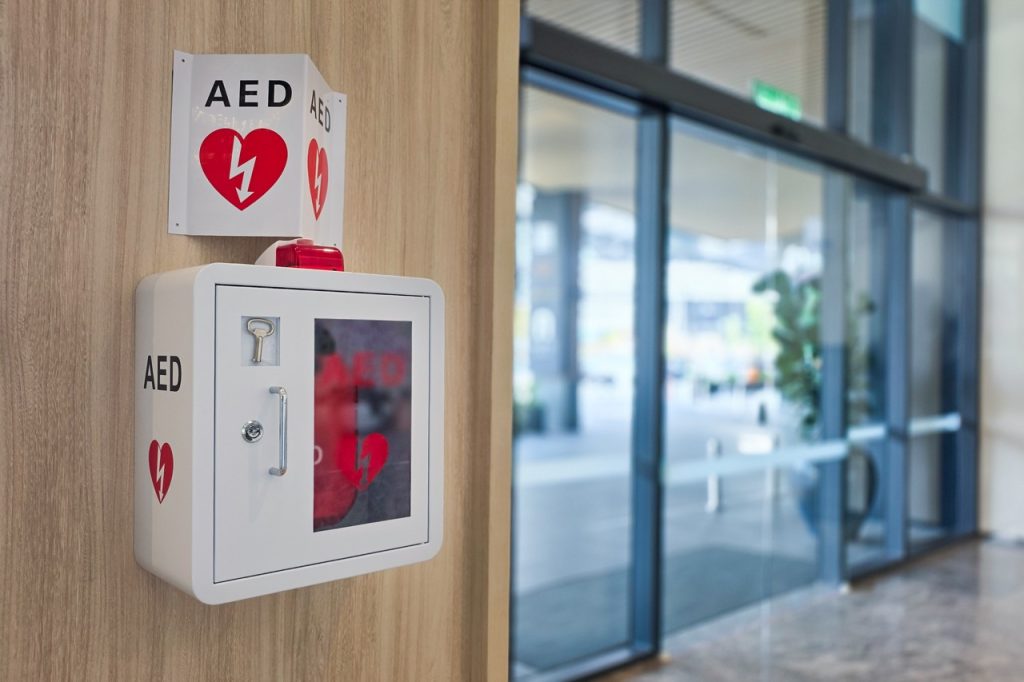
AED in a lock box with a sign for clear visibility on a business wall as first aid in medical emergency situation

What Is an AED and Why Does It Matter?

AED stands for Automated External Defibrillator. An AED is a life-saving medical device that administers an electric shock to help restore a person’s normal heart rhythm during a cardiac arrest. AEDs are designed to be used by anyone by providing clear and easy-to-follow prompts.

Read our Guide to Automated Defibrillators to learn more about how they work.

Having an AED (Automated External Defibrillator) onsite and easily accessible in your business is an important investment in preparedness. Prompt and proper administration of medical support to someone experiencing a sudden cardiac arrest can significantly improve their chances of survival until medical professionals arrive.

In fact, the American Heart Association (AHA) reports that “immediate CPR and use of an AED can double, or even triple, survival rates”.

Are AEDs Required by Law in the Workplace?

AEDs are not required by federal law in every workplace, but depending on your state, industry, and facility type, your place of business may be subject to mandates and regulations that require them.

Industries and Locations Where AEDs Are Commonly Required

As we’ve established, not all businesses require having an AED on site; however, certain industries more commonly do so than others. This is particularly true in high-traffic areas, and community spaces are essential for ensuring public safety.

Here are some industries and locations where AEDs are commonly required:

  • Healthcare facilities
  • Construction sites
  • Schools and universities
  • Fitness centers and gyms
  • Government buildings
  • Airports and large transportation hubs
  • Large public venues (stadiums, arenas, event spaces)

AED Laws Differ by State

To understand the state AED laws, it’s good to know that the requirements can really differ from one state to another. Some places actually require you to register your AED, and even keep up with regular maintenance checks to make sure it’s always ready to go.

We recommend checking the regulations specific to your area.

Should Your Business Have an AED Even If It’s Not Required?

Even if your business type does not require you to have an AED, it’s a good idea to have one. Consider it the smart, responsible decision and not just checking a legal checkbox. It can be especially wise for businesses that serve the public and have high foot traffic. Other situations could be having staff or employees with known health risks that could increase their odds of experiencing a medical emergency. As previously mentioned, quickly administering an AED can significantly improve survival rates.

Why Every Workplace Should Offer Group CPR Training

How to Implement an AED In Your Business

1. Purchase AED Units:

Buy one or more Automated External Defibrillators (AEDs) based on the size of your business. 

2. Proper Installation: 

Ensure the AED unit is properly installed and placed in a clearly visible location.

3. Staff Training: 

After informing your staff of the newly installed AEDs and their location, provide proper training on CPR, Basic Life Support (BLS), and the use of the AED.

4. Routine Maintenance: 

Plan for regular maintenance and checks to ensure the AED is functioning properly.

Purchase an AED for your Business

Liability Protection and Good Samaritan Laws

Many people worry about what could go wrong when using an AED. This is a common concern, but knowing about Good Samaritan laws can help ease those fears. Good Samaritan laws protect individuals who help in emergencies, like using an AED or providing CPR. You won’t face legal issues if you act in good faith and without serious mistakes.

This means if you or one of your employees helps someone during a cardiac emergency, you’re usually protected if things don’t go as planned. It’s also important to have proper training and to keep the AED well maintained, as this reduces the chances of problems. When you and your staff know where the AEDs are located and how to use them, you can handle emergencies more effectively.

How to Organize CPR and First Aid Training for Your Employees

How Training Supports Your Emergency Preparedness Plan

Being familiar with an AED, how it works and where it is located within your business or workplace is just one piece of the puzzle when it comes to an emergency preparedness plan. Simply having an AED onsite isn’t enough, preparing your team and organization with proper training can make all the difference in the unthinkable scenario that an employee, coworker, customer or another individual goes into cardiac arrest or experiences another medical emergency in your business.

Schedule AED, CPR and First Aid Training for Business with HeartCert

Knowing how an AED works is an important first step, but hands-on CPR and AED training can help you feel even more prepared to respond quickly and confidently in an emergency. HeartCert offers easy-to-complete, comprehensive CPR and first aid training so you can learn the skills, build your confidence and be prepared to act in the event of an emergency. 

AED requirements vary, but preparedness shouldn’t.

At HeartCert, we want businesses and individuals to be informed, confident and empowered to take action in the event of a medical emergency. In addition to AED and CPR training, we offer first aid, basic-life support (BLS), OSHA compliance training and more. Our emergency response trainings prepare you for more than just using equipment like an AED; it equips you to respond to real-life events.

Not sure where to start? HeartCert can help.

Contact us to learn more about AED programs and training options.

Reach out Today

Sources:

America Heart Association AED Fact Sheet

https://aed.us/blogs/aed-legislation/aed-laws-by-state-what-you-need-to-know-to-stay-compliant-and-save-lives

https://www.aed.com/aed-legislation

HeartCert is your trusted training partner for CPR, ACLS, PALS, EMR, First Aid, CNA, TMA, IV, EKG and more, throughout the United States.

Courses include CPR/AED/First Aid, Basic Life Support (BLS), Advanced Cardiac Life Support (ACLS), Pediatric Advanced Life Support (PALS), Certified Nursing Assistant training, IV training, EKG training, babysitter basics and more. Courses and certifications from both the American Heart Association and American Red Cross are available. We offer virtual courses and certifications, in all 50 states as well as in-person classes at our headquarters, HeartCert CPR Eagan and major cities in Iowa, Illinois, Michigan, Minnesota, Missouri, Mississippi, Nebraska, Pennsylvania, Texas and Wisconsin.
 

Filed Under: CPR, News Tagged With: American Heart Association, CPR, CPR Certification, CPR course, CPR training, First Aid, first aid course, first aid training, group training, HeartCert, HeartCert CPR

How Does an AED Work? A Guide to Automated Defibrillators

5 months ago by tims

In an emergency, every second matters, especially during sudden cardiac arrest. An Automated External Defibrillator (AED) is designed to be simple to use, even for someone with no medical background. But how does it actually work, and what happens when you use one? 

This quick guide breaks it down step-by-step so you can feel more confident if you ever need to respond and use an AED device.

AED or Automated External Defibrillator installed on wall in Sports Gym as first aid in heart attack emergency situation.

What Is an AED?

An AED or an Automated External Defibrillator is a portable medical device designed to treat sudden cardiac arrest. Defibrillators deliver an electric shock that can help restore a normal heart rhythm. 

These life-saving devices are commonly found in public places, workplaces, and schools. However, they can be beneficial anywhere, including homes, as proper use of an AED plays a crucial role in enhancing survival rates for individuals experiencing cardiac events when every moment counts.

Step-by-Step: How to Use an AED

Details on how to use an automated external defibrillator (AED) are widely available, but trusted organizations like the American Red Cross provide clear, step-by-step directions based on current emergency response practices. 

The following overview is adapted from Red Cross recommendations, with simplified language to help you quickly understand what to do in a real-life situation. 

Step 1: Check the scene and call for help

Make sure the area is safe. Check if the person is unresponsive and not breathing normally, and have someone call 911 right away.

Step 2: Turn on the AED

As soon as the device is available, power it on and follow the voice or visual instructions.

Step 3: Expose the chest and place the pads

Remove clothing from the chest and ensure the skin is dry. Apply the pads as indicated, typically one on the upper right chest and the other on the lower left side.

Step 3A: Connect the pads (if needed)

Some AEDs require plugging in the pad connector before use.

Step 4: Allow the AED to analyze

Make sure no one is touching the person while the device checks the heart rhythm. Clearly say “clear” to alert others.

Step 5: Deliver a shock if advised

If prompted, ensure everyone is clear and press the shock button.

Step 6: Resume CPR immediately

After the shock is administered (or if no shock is recommended), begin CPR right away and continue following AED prompts until help arrives.

Watch the steps here:  How to Use an AED on an Adult

Common Questions Around AED Usage

When Should an AED Be Used?

An AED should be used when a person is unresponsive, not breathing, or only gasping, and you suspect sudden cardiac arrest.

Can Anyone Use an AED?

Yes, anyone can use an AED; you do not need to be a medical professional to use one. AEDs are intended for public use and the voice and visual instruction guide you so you can provide support during a medical emergency until medical professionals arrive. 

Are AEDs Safe to Use?

Yes, AEDs are safe for both the user and the patient. They have built-in safeguards and will not deliver a shock unless needed. 

Why AEDs Are So Important

cpr with aed training and blur background

Automated External Defibrillators (AEDs) are an incredibly valuable tool that significantly boosts survival rates during cardiac arrest incidents. In fact, studies indicate that using an AED can more than double a person’s chances of making it through, especially when compared to relying on CPR alone.

When AEDs are readily available and individuals are willing to use them, the outcomes can be greatly enhanced. This is why increasing public awareness and access to AEDs can be a life-saving measure in both public spaces and private settings.

Purchase an AED for your business or household: https://heartcertcpr.com/aed-purchases/ 

AED + CPR: How They Work Together

When a cardiac arrest occurs, the combination of AED usage and properly performed CPR is the key to increasing the chances of survival. First, the AED works to restore a normal heart rhythm, while hands-on CPR promotes blood circulation to vital organs and ensures that oxygen continues to reach the brain and heart during this critical time. 

Using both AED and CPR together not only enhances the effectiveness of the response but also significantly improves the overall outcomes for the person in cardiac arrest.

Be Prepared to Act in an Emergency

Even though AED usage during a cardiac arrest can significantly increase survival rates, the use of automated external defibrillators (AEDs) by bystanders remains low. Some research shows that in situations where an AED could be used, bystanders use them only 2-5% of the time. Hesitation is most commonly due to reasons such as lack of knowledge, reluctance to use, and limited access to these devices.

Knowing how an AED works is an important first step, but hands-on CPR and AED training can help you feel even more prepared to respond quickly and confidently in an emergency. HeartCert offers easy to complete, comprehensive CPR and first aid training so you can learn the skills, build your confidence and be prepared to act in the event of an emergency. 

Get started today. Sign up for an online or in-person class near you.

Sign Up Today

Sources:

https://www.redcross.org/take-a-class/aed/using-an-aed/aed-steps

https://hdsbpc.cdc.gov/s/article/Evidence-of-Impact-for-Public-Access-Defibrillation


HeartCert is your trusted training partner for CPR, ACLS, PALS, EMR, First Aid, CNA, TMA, IV, EKG and more, throughout the United States.

Courses include CPR/AED/First Aid, Basic Life Support (BLS), Advanced Cardiac Life Support (ACLS), Pediatric Advanced Life Support (PALS), Certified Nursing Assistant training, IV training, EKG training, babysitter basics and more. Courses and certifications from both the American Heart Association and American Red Cross are available. We offer virtual courses and certifications, in all 50 states as well as in-person classes at our headquarters, HeartCert CPR Eagan and major cities in Iowa, Illinois, Michigan, Minnesota, Missouri, Mississippi, Nebraska, Pennsylvania, Texas and Wisconsin.

 

Filed Under: CPR, News Tagged With: American Heart Association, CPR, CPR Certification, CPR course, CPR training, First Aid, first aid course, first aid training, group training, HeartCert, HeartCert CPR

Four Silent Heart Attack Symptoms in Women

5 months ago by tims Leave a Comment

Heart attack symptoms don’t always look the way you expect, and that is especially true for women. While many people picture sudden, intense chest pain, the reality is often much more subtle. Understanding these differences can make all the difference when it comes to recognizing a serious issue early.

One of the most important steps is knowing the signs and symptoms of a heart attack and how they can present differently in women compared to men. Read on for details on four silent heart attack symptoms women should be aware of, based on guidance from the American Heart Association.

Senior woman experiencing chronic neck pain and stiffness, touching her hurting neck and shoulder while sitting at a kitchen table, symbolizing health issues and physical discomfort in old age

Do You Know These Hard-to-Recognize Heart Attack Symptoms in Women?

Well-known heart attack symptoms can include chest pain and radiating discomfort in the left arm. But, as Dr. Suzanne Steinbaum, director of The Heart and Vascular Institute at Lenox Hill Hospital in New York City, explains, there are several other ways your body may tell you when something isn’t quite right, potentially with your heart.

1.) Shortness of Breath

Elderly woman with gray hair in a yellow shirt stands in a park, with hand placed on chest According to Dr. Steinbaum, shortness of breath can be a significant warning sign for women, particularly in the weeks leading up to a heart attack. This symptom may manifest as an unexpected and notable difficulty in breathing, especially if a person is accustomed to engaging in physical activities without issue.

“If you are used to doing a certain amount of activity and then, all of a sudden, you can’t get enough air, that is when I get concerned,” says Steinbaum.

It’s important for individuals experiencing these changes in their breathing patterns to seek medical attention, as it may indicate underlying cardiovascular issues that require prompt evaluation.

2.) Back Pain

Tired young woman feels acute back pain as she stands up after working on computer Another silent heart attack symptom that women experience leading up to or during a heart attack is back pain. Many adults deal with back pain on occasion, so it’s important to understand this symptom and how it differs from other aches you may deal with.

Irregular pain in the lower or upper back can indicate stress to the heart muscle, Steinbaum says. You may notice that the pain is different from other back pains you’ve experienced. You may also notice that the pain starts in your chest and radiates to the back of your body. It may also present itself as pain in the neck area or in one or both of your arms.

3.) Jaw Pain

Jaw pain is another symptom that women experience before or during a heart attack. “I had one patient who would feel her jaw start to hurt every time she got on a treadmill,” Steinbaum says. “But once she stopped, her jaw pain would go away. She went to a dentist, but there wasn’t anything wrong with her teeth.”

This discomfort continued until the woman experienced a heart attack. When she came into Steinbaum’s office after the event, it was evident that the jaw pain was directly linked to what was happening in her heart.

“Sometimes the heart isn’t able to give a good signal and, instead, the pain can radiate to the neck, jaw and back.” she says.

4.) Nausea

Nausea can often be an early warning sign of a heart attack, sometimes appearing weeks or even days beforehand. For instance, as Steinbaum explains, TV personality Rosie O’Donnell reportedly regurgitated a few times before she experienced a heart attack.

This symptom might be mistaken for unrelated illnesses, so it’s crucial to pay close attention and recognize nausea in conjunction with other potential warning signs, such as chest pain or shortness of breath.

Other Common Heart Attack Symptoms for Women

Above are common symptoms that often go ignored because they are not always associated with heart complications. However, they are not the only symptoms women report experiencing before a heart attack. 

Other common symptoms include:

  • Fatigue
  • Lightheadedness
  • Unusual tiredness and weakness
  • Chest pain
  • Stomach pain
  • Breaking out in a cold sweat

How Heart Attack Symptoms Differ for Women From Men

In the event of a heart attack or the time leading up to one, men are more likely to have intense chest pain, while women are more likely to have subtler symptoms like fatigue, nausea, or shortness of breath. These differences can make heart attacks in women harder to recognize.

Know the Signs and Trust Your Gut

If you aren’t feeling normal or are experiencing any of the symptoms above, head to your local emergency room. It is best not to wait to see if things resolve on their own and to take care of yourself and prevent damage to your heart in the event you are having a heart attack.

Many women who have had a heart attack look back at their symptoms and explain they just had an awareness that something wasn’t quite right.

“Ninety percent of my female patients who’ve just had a heart attack tell me that they knew it was their heart all along. That they just had a feeling… A woman’s intuition is a very strong thing; don’t ever discount it,” Steinbaum says.

Learn more about your risk for heart disease, as well as factors that increase your risk , on Go Red For Women.

Frequently Asked Questions about Heart Attack Symptoms in Women

What are the most common heart attack symptoms in women?

Women can often experience chest discomfort, but it may feel like pressure or tightness rather than sharp pain. Other common symptoms include shortness of breath, fatigue, nausea, lightheadedness, and discomfort in the back, neck, jaw, or stomach.

What are the warning signs that can happen days before a heart attack?

Women may experience unusual fatigue, shortness of breath, or mild discomfort in the chest or upper body days or even weeks before a heart attack.

Why is it important to recognize heart attack symptoms early?

Quickly recognizing the symptoms and receiving medical care and treatment can reduce damage to the heart and improve survival rates. Acting fast in this scenario can truly save a life.

Are heart attack symptoms in women easy to miss?

Yes, they can be because symptoms are often less obvious and women may dismiss them as stress, anxiety, or minor illness, which can delay seeking care.

What should someone do if they think they are having a heart attack?

Call 911 immediately. Do not wait to see if symptoms go away. Early treatment can significantly improve outcomes.

Know the Signs. Be Ready to Respond.

Understanding silent heart attack symptoms is important, but being prepared to respond is just as important. In the event of a medical emergency, every second counts, and training in First Aid and CPR can help you know what to do if someone around you is experiencing a heart attack, cardiac arrest or another type of emergency until professional help arrives.

HeartCert offers CPR and First Aid classes for all skill sets and levels of experience. With HeartCert’s First Aid and CPR certification, you’ll know exactly what to do in a high-pressure situation and feel confident stepping in when it matters most. We can teach a convenient one-on-one CPR or first aid training session, or we can certify a large group on-site, depending on your needs.

Find the right First Aid and CPR Class for you.

Start Your CPR and First Aid Training

Sources:

https://www.heart.org/en/ 

https://www.heart.org/en/health-topics/heart-attack/warning-signs-of-a-heart-attack/heart-attack-symptoms-in-women 

This is an updated blog that was originally published in 2017. 

HeartCert is your trusted training partner for CPR, ACLS, PALS, EMR, First Aid, CNA, TMA, IV, EKG and more, throughout the United States.

Courses include CPR/AED/First Aid, Basic Life Support (BLS), Advanced Cardiac Life Support (ACLS), Pediatric Advanced Life Support (PALS), Certified Nursing Assistant training, IV training, EKG training, babysitter basics and more. Courses and certifications from both the American Heart Association and American Red Cross are available.

Filed Under: News Tagged With: CPR, CPR Certification, cpr classes, CPR training, heart attack, HeartCertCPR

Why Every Caregiver Should Be CPR Certified

6 months ago by tims

Whether you’re taking care of children, elderly patients, or anyone of any age and ability, emergencies can happen. One of your clients could choke on their food, inhale too much water while swimming, collapse, or stop breathing without notice. As a caregiver, you’re the first person—and sometimes the only person—present when an emergency happens.

At HeartCert, we’re nationally recognized for teaching CPR and First Aid, so we know that earning your certification means gaining confidence, the tools to act quickly in an emergency, and peace of mind in any caregiving role. In this article, we’ll share why every caregiver should be CPR certified.

What Is CPR Certification?

CPR (Cardiopulmonary Resuscitation) certification is emergency response training for cardiac arrest, choking, and breathing emergencies. It uses a combination of chest compressions, rescue breaths, and AED utilization to keep oxygen and blood flowing when someone’s body isn’t capable of doing it for them.

Most CPR certification courses include:

  • Adult, child, and infant CPR training
  • AED (automated external defibrillator) training
  • Basic First Aid

Related Content: What’s the Difference Between CPR and First Aid Training?


How Long Does It Take to Become CPR-Certified?

CPR certification is surprisingly short and sweet with the right training program. Most courses can be finished in a day or two.

At HeartCert, we offer blended classes where you can get your certification with a two-hour in-person session and some online coursework.

Explore Available CPR and First Aid Classes


Why Is CPR Certification Important as a Caregiver?

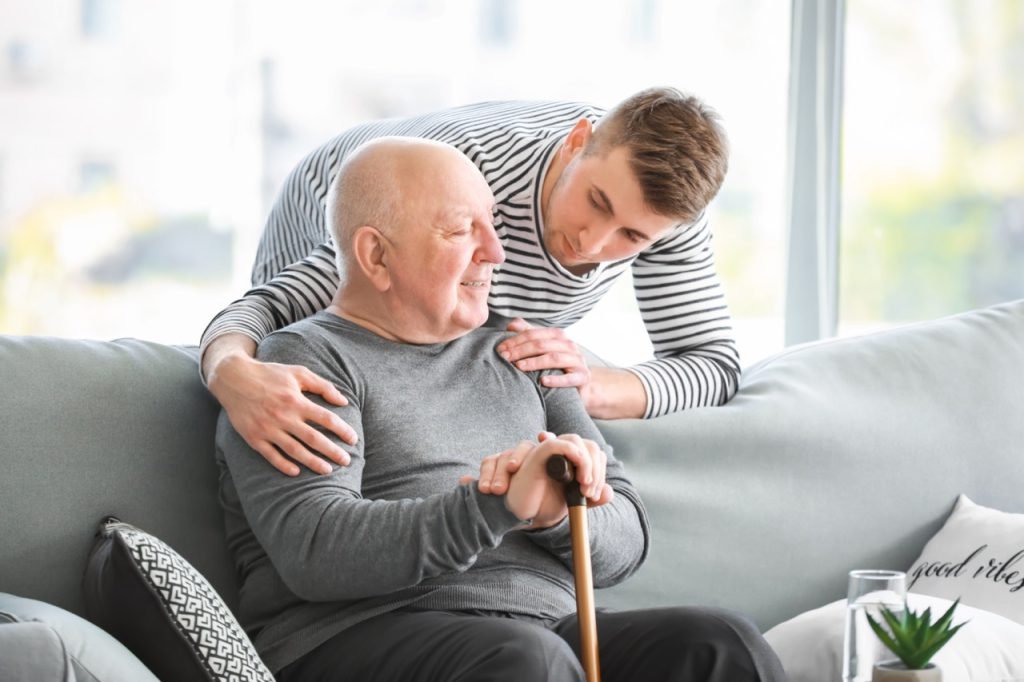
A young man caregiver with a senior man holding a cane and sitting on a couch in a bright room

As a caregiver, you want to think positively. It’s easy to think you’ll never be in a tough situation or that you’d know how to handle yourself in an emergency, but unless you’re given the proper lessons and credentials, it’s impossible to know whether you’d respond appropriately.

CPR certification is more important than you think. Emergencies don’t slow down for you. They happen quickly, and you have moments to act to save someone’s life. You likely won’t have time to Google something, and even if you do, you’ll never know the state you’ll be in when a situation arises.

By equipping yourself with the proper education and know-how in a tough situation, you won’t need to stop and wonder what comes next—you’ll already know. Becoming CPR-certified is the best way to prepare yourself as a caregiver.

Related Content: Stories of CPR Success from Everyday People


Advantages of Getting Your CPR Certification

Getting your CPR certification as a caregiver helps save lives and can even benefit your career. Having the knowledge and professional skills necessary to keep someone safe is crucial—especially in situations where you least expect it. Some of the greatest advantages of getting CPR-certified include:

  • Doubling or tripling the odds of survival
  • Being prepared in stressful situations
  • Saving lives during emergencies
  • Being responsible for your clients
  • Enhancing care and credibility in your role
  • Gaining confidence and advancing your skills


Become CPR-Certified with HeartCert Today

After seeing why every caregiver should be CPR certified, you might want to get started with your training. Getting CPR-certified is as easy as taking a class through HeartCert since we offer online classes and in-person training around the country. Our courses offer:

  • American Red Cross CPR, First Aid basics, and AED training
  • Nationally recognized certification
  • Hands-on, instructor-led classes
  • Small class sizes for enhanced learning
  • Private and group training offerings

Are you ready to gain life-saving skills as a caregiver? Start your courses with HeartCert to get certified.

Enroll Today Before Classes Fill Up


Sign Up Today


HeartCert is your trusted training partner for CPR, ACLS, PALS, EMR, First Aid, CNA, TMA, IV, EKG and more, throughout the United States.

Courses include CPR/AED/First Aid, Basic Life Support (BLS), Advanced Cardiac Life Support (ACLS), Pediatric Advanced Life Support (PALS), Certified Nursing Assistant training, IV training, EKG training, babysitter basics and more. Courses and certifications from both the American Heart Association and American Red Cross are available. We offer virtual courses and certifications, in all 50 states as well as in-person classes at our headquarters, HeartCert CPR Eagan and major cities in Iowa, Illinois, Michigan, Minnesota, Missouri, Mississippi, Nebraska, Pennsylvania, Texas and Wisconsin.

 

Filed Under: CPR, News Tagged With: American Heart Association, CPR, CPR Certification, CPR course, CPR training, First Aid, first aid course, first aid training, group training, HeartCert, HeartCert CPR

Start Your CNA Career with HeartCert’s Stay and Train Program

6 months ago by tims

Starting a career in healthcare doesn’t have to take years. Becoming a Certified Nursing Assistant (CNA) is a fast-track career option that offers high demand and fulfilling work. Deciding to start your CNA career is an exciting step but knowing where and how to begin your training isn’t always simple.

Finding the right program, figuring out where you’ll stay, and making it all fit into your schedule can slow things down. With HeartCert’s Stay and Train program, everything is designed to work together, making it easier to focus on your training and move forward with confidence.

young nursing assistant student with stethoscope around neck sitting in classroom

What Is the HeartCert Stay and Train CNA Program?

HeartCert Stay & Train CNA Package is a streamlined CNA training program specifically designed to remove the “commute barrier” for Minnesota students. Instead of driving back and forth for multiple days of intensive training, this package bundles your certification coursework with local accommodations in Mankato, MN. Our hybrid program is designed to simplify the entire CNA training process by bringing everything together so you can focus on completing your course successfully and starting your CNA career with confidence.

CNA Certification: Open Doors in Your Healthcare Career


How the Stay and Train Hybrid CNA Training Program Works

Step 1: Register Online

Visit HeartCert.com and register for an upcoming CNA State Approved Certified Nursing Assistant (CNA) at our Mankato location. 

Step 2: Complete Online Course Work (43 Hours)

You can study at your own pace from the comfort of your home. Our program includes comprehensive online access and personalized tutoring.

Step 3: Attend In-Person Skills (15 Hours)

Travel to Mankato, MN, and stay at our partnered hotel nearby at a discounted rate while completing focused, hands-on clinicals.

Step 4: Prepare and Take State Exam

After completing your training, we will guide you on everything necessary to prepare for the successful completion of the state exam to obtain your CNA certification.

What the Stay and Train CNA Package Includes

  • Fast-Track Training: 43 hours of online theory followed by 15 hours of in-person skills.
  • Exclusive Lodging: Stay at the Microtel Hotel in Mankato for only $69.99/night.
  • Perks Included: Your stay includes a hot breakfast to fuel your training days.
  • Comprehensive Tuition: Includes online access, skill supplies, tutoring, and state exam prep.

Find Out About Payment Options for CNA Training

Why Choose HeartCert for Your CNA Certification?

At HeartCert, we are committed to ensuring that our students are well-prepared to meet the demands of their new careers. Our students learn essential skills such as vital signs, grooming, and patient monitoring, enabling them to become exceptional healthcare professionals. Our dedicated instructors provide ongoing support and guidance as you take these important steps.

HeartCert’s Stay and Train CNA course is a state-approved CNA training program, and our curriculum fully prepares students for the Minnesota State Competency Exam to join the Nursing Assistant Registry. Our programs are designed to offer real-world experience and practical training so you are well-positioned to begin your healthcare career.

Starting Your CNA Training: What to Know Before You Begin

Take the First Step Toward Your CNA Career

If you’ve been thinking about starting your CNA career, this is your opportunity to take that first step with a program designed around your needs. Don’t let the challenges of coordinating training and daily travel prevent you from achieving your goals. With HeartCert’s Stay and Train program, you can focus less on managing logistics and more on developing the skills you need for success. Every aspect of our Stay and Train program is designed to work together, making it easier to focus on your training, move forward with confidence and step into your new career faster.

Ready to start?

View upcoming schedules and save your spot for one of our Stay & Train CNA programs.

See Upcoming Courses

HeartCert is your trusted training partner for CPR, ACLS, PALS, EMR, First Aid, CNA, TMA, IV, EKG and more, throughout the United States.

Courses include CPR/AED/First Aid, Basic Life Support (BLS), Advanced Cardiac Life Support (ACLS), Pediatric Advanced Life Support (PALS), Certified Nursing Assistant training, IV training, EKG training, babysitter basics and more. Courses and certifications from both the American Heart Association and American Red Cross are available.We offer virtual courses and certifications, in all 50 states as well as in-person classes at our headquarters, HeartCert CPR Eagan and major cities in Iowa, Illinois, Michigan, Minnesota, Missouri, Mississippi, Nebraska, Pennsylvania, Texas and Wisconsin.


Filed Under: News Tagged With: certified nursing assistant, CNA, cna training, healthcare professionals, HeartCertCPR, nursing, nursing assistant

Why Every Workplace Should Offer Group CPR Training

7 months ago by tims

The difference between life and death at work shouldn’t come down to luck.

Picture this: A colleague collapses at their desk. Hearts racing, everyone freezes, and no one really knows what to do. Their heart has stopped, and with every passing minute without help, their chance of survival drops by 10%. Someone yells, “Where’s the AED?” Blank stares. Turns out, only half of employees even know where to find one.

This scenario plays out 10,000 times a year in American workplaces, according to the U.S. Occupational Safety & Health Administration. Ten thousand cardiac arrests. Ten thousand moments where someone’s life hangs in the balance. Ten thousand chances to be a hero, or to stand there wishing you knew what to do.

It doesn’t have to be this way. Group CPR training can help turn your team from bystanders into lifesavers in situations like this. Here’s why every workplace needs it.

CPR and first aid training with a group in a workplace office

Why Every Workplace Should Offer Group CPR and First Aid Training

Medical Emergencies Happen at Work

The truth is, a medical emergency in the form of an accident, injury or a cardiac arrest can happen really anywhere and to anyone. But because most individuals spend at least 40 hours a week at work, it is the second most common place for an emergency situation to occur.

Certain work environments and industries are more susceptible to experiencing medical emergencies. Industries such as construction, manufacturing, industrial sectors, warehousing, transportation, and agriculture all involve the use of machinery, heavy equipment, or physical activity that can lead to accidents or unintended emergencies.

In the fitness industry, there is an increased risk of cardiac arrest and overexertion injuries.

In food service, burns, cuts, and other injuries occur frequently in fast-paced kitchen environments.

In retail environments, slip-and-fall accidents, overexertion from lifting, and customer medical emergencies can happen unexpectedly.

Training can make all the difference in an effective, immediate response before emergency services arrive. 

Faster Response Saves Lives

It’s not just knowing what to do in an emergency situation, but the fact of the matter is, in these scenarios, time can make all the difference. Trained employees are more adept at acting confidently and quickly, and providing CPR or first aid and early intervention can greatly reduce long-term bodily damage or even death. 

Related: 4 Reasons to Offer CPR Training to Employees

Businesses That Benefit from Group CPR Training

Businesses and organizations of all kinds will find value in providing group CPR and first aid training to their staff, employees and teams. Some that are well suited for this option include:

  • Offices
  • Manufacturing facilities
  • Schools and childcare centers
  • Gyms, fitness centers, and sports facilities
  • Dental, vision and other healthcare clinics
  • Warehouses and retail environments

How to Organize CPR Training for Your Employees


Benefits of Group CPR Training for Employers

Improved Workplace Safety

Regularly offering CPR and first aid training to your team of employees helps create a safer environment for employees, customers and visitors. CPR training can help support broader safety and emergency preparedness goals.

Cost-Effective Training Solution

Group CPR and first aid training is more efficient than individual certifications in terms of both time and costs. HeartCert’s trainings are scalable for small teams or large organizations.

Boosts Employee Confidence and Morale

Companies that offer CPR and first aid training help their employees feel empowered to help in emergency situations both in the workplace, at home and in public.

Organizations who provide CPR and first aid training to their staff are doing more than improving outcomes in emergencies; they are demonstrating to their employees that their lives and safety matters.

Group CPR, First Aid, and OSHA Training with HeartCert

Meet Compliance and Safety Requirements

Certain businesses and industries are required to complete routine training and courses for compliance and safety requirements. For these businesses, partnering with a provider that offers OSHA training is essential.

At HeartCert, we offer OSHA training for general industry, construction industry, hazardous materials transportation, forklift training and more.

Find out more about the OSHA trainings we offer.

Flexible Training Options for Businesses

Group CPR and first aid training with HeartCert provides flexible options to work for your organization and staff’s schedules. Our on-site training can be scheduled when it’s convenient for your business, either as a one-time event for large groups or in several groups scheduled around shifts for smaller teams to attend. Whatever works best for your company and team, we can accommodate so everyone can get the proper training they need.

Expert Instruction and Real Results

At HeartCert, we’re committed to supporting organizations that prioritize CPR and first aid training for their teams. Our experienced instructors bring real-world expertise to every session, providing the perfect balance between professionalism and approachability. We deliver engaging, interactive sessions that keep participants involved while providing practical, actionable skills your workplace can rely on. So whether you’re needing training for a small team or an entire department, we can customize our approach to meet your organization’s unique needs.

Schedule CPR and First Aid Training For Employees

When you invest in CPR training for your employees, it can be more than just a step towards compliance; it’s a way of showing a commitment to their safety and well-being. CPR-certified employees can be the difference between tragedy and survival in a workplace emergency. Make preparedness a priority today, not a regret tomorrow. Partner with HeartCert to set up group training sessions that give your team both the expertise and confidence to step up when lives are on the line.

Schedule On-Site CPR Training

Sources:

https://cpr.heart.org/en/resources/cpr-facts-and-stats

https://www.dol.gov/newsroom/releases/osha/osha20160317


HeartCert is your trusted training partner for CPR, ACLS, PALS, EMR, First Aid, CNA, TMA, IV, EKG and more, throughout the United States.

Courses include CPR/AED/First Aid, Basic Life Support (BLS), Advanced Cardiac Life Support (ACLS), Pediatric Advanced Life Support (PALS), Certified Nursing Assistant training, IV training, EKG training, babysitter basics and more. Courses and certifications from both the American Heart Association and American Red Cross are available. We offer virtual courses and certifications, in all 50 states as well as in-person classes at our headquarters, HeartCert CPR Eagan and major cities in Iowa, Illinois, Michigan, Minnesota, Missouri, Mississippi, Nebraska, Pennsylvania, Texas and Wisconsin.


Filed Under: CPR, News Tagged With: American Heart Association, CPR, CPR Certification, CPR course, CPR training, First Aid, first aid course, first aid training, group training, HeartCert, HeartCert CPR

What’s the Difference Between CPR and First Aid Training?

7 months ago by tims

When you start looking into CPR and First Aid training, you’ll quickly notice that some courses cover one, while others include both. So how do you know which you actually need? Keep reading to learn what each training involves, the key differences between them, and how to choose the option that’s right for you.

red first aid kit beside a CPR mannequin in a training setting

What is CPR Training?

CPR stands for cardiopulmonary resuscitation. This life-saving procedure is used on an individual when they are unconscious, unresponsive, and not breathing. 

CPR training teaches individuals how to respond effectively during an emergency. It includes identifying when to provide support, understanding when to administer CPR, and when it is not appropriate to do so. The training covers essential skills such as performing chest compressions, delivering rescue breaths, and using an Automated External Defibrillator (AED).

What is First Aid Training?

First aid training includes a variety of techniques for responding to injuries or medical emergencies. First aid training helps to equip individuals with the knowledge and skills necessary to provide immediate and at times life-saving assistance to someone experiencing a sudden injury. Typically, first aid training covers essential skills such as controlling bleeding, treating burns, assisting someone who is choking, and managing fractures.

Key Differences Between CPR and First Aid Training

While these certifications complement each other, they cover different skills and emergency situations. Here are some of the key differences you’ll find between the two:

CPR Training

First Aid Training

Primary focus is on life-threatening cardiac and breathing emergencies

Primary focus is on treating common injuries and sudden illnesses

Used when someone’s heart stops or they stop breathing

Used for injuries like cuts, burns, sprains or choking

Teaches chest compressions, rescue breaths and AED use

Teaches bleeding control, burn care, splinting and other injury response

Typically performed until emergency responders arrive

Provides care until professional medical help is needed

Often required for those in healthcare, childcare and safety roles

Commonly required for workplaces, schools and facilities that serve the public

Shorter, highly specific training

Broader training covering many scenarios


Who Should Take CPR and First Aid Training?

Anyone can benefit from regular CPR and First Aid training, but those who are especially inclined to keep up their certification include: 

  • Healthcare workers
  • Childcare providers
  • Workplace safety teams
  • General public
  • Employers and employees
  • Teachers and coaches
  • Parents and caregivers
  • Outdoor and industrial workers

Related: How Often Should I Renew My CPR Certification?


CPR and First Aid Training Program Options

Although many training programs combine both CPR and first aid, not all do. So it’s important to know what skills or certifications you want or need to obtain before signing up. Also, classes can be offered in a variety of formats; some are in-person at an on-site location, while others are online.

At HeartCert, our training combines CPR and first aid because we firmly believe that in the case of a true medical emergency, being informed and capable of providing care to those around you is imperative.

Our goal is to make the certification process as easy and accessible as possible, which is why we offer several different program options so you can choose what is most beneficial and convenient to you.

Choose from our available training options:

At-Home Course: Complete your certification virtually online, and we’ll deliver a CPR manikin directly to your door.

Private CPR Class: Start by completing the first part of your CPR training online from the comfort of your home. When you’re ready, you can schedule a time to finish the hands-on portion at one of our CPR learning station locations.

In-Person Group Classes: Sign up for a class at one of our locations to complete your training in a classroom setting with an experienced instructor.

Corporate Training: Our instructors will come to your business or organization to train your team in CPR and first aid.

Customized CPR Training that Fits Your Life and Schedule

Be Prepared for Emergencies With HeartCert Trainings

When an emergency strikes, you can’t predict whether CPR or first aid will be the critical skill needed. The best approach is to prepare yourself for both scenarios and hope you never need to use either. Comprehensive training ensures you’re ready for whatever comes your way.

At HeartCert, our lifesaving education trainings are designed to be accessible and flexible. No matter your schedule, preference and learning style, we have CPR training designed with you in mind. From in-person training at one of our physical locations to online certification for greater flexibility, you can choose which option is best for you.

Schedule your CPR and first aid training today. 

Find A CPR & First Aid Class


HeartCert is your trusted training partner for CPR, ACLS, PALS, EMR, First Aid, CNA, TMA, IV, EKG and more, throughout the United States.

Courses include CPR/AED/First Aid, Basic Life Support (BLS), Advanced Cardiac Life Support (ACLS), Pediatric Advanced Life Support (PALS), Certified Nursing Assistant training, IV training, EKG training, babysitter basics and more. Courses and certifications from both the American Heart Association and American Red Cross are available. We offer virtual courses and certifications, in all 50 states as well as in-person classes at our headquarters, HeartCert CPR Eagan and major cities in Iowa, Illinois, Michigan, Minnesota, Missouri, Mississippi, Nebraska, Pennsylvania, Texas and Wisconsin.


Filed Under: News Tagged With: American Heart Association, CPR, CPR Certification, CPR course, CPR training, First Aid, first aid course, first aid training, healthcare professionals, HeartCert, HeartCert CPR

Heart Attack Survival: Quick Steps to Take in the First Minutes

8 months ago by tims

Did you know that in the United States, someone has a heart attack every 40 seconds? Knowing the signs of a heart attack and what to do if you or someone around you were to experience one can be the difference between life and death. 

Most heart attack deaths happen within the first hour of occurring, which is why immediate action matters and can significantly improve survival rates. In this blog, we’ll cover how to recognize heart attack symptoms and the emergency steps to take in those critical first moments.

a woman sitting on a bench outdoors concerned about man holding his chest due to pain from heart attack

Recognize the Warning Signs Immediately

The most important thing you can do to protect yourself and those around you is knowing the signs of a heart attack. Acting promptly and not hesitating when you suspect a potential heart attack is critical to survival. 

Here are the main warning signs of a heart attack:

  • Chest pressure, squeezing, or discomfort
  • Pain radiating to arm, jaw, or back
  • Shortness of breath
  • Nausea, lightheadedness, cold sweat

Note that symptoms vary and can be subtle (especially for women).

Learn More: 10 Early Signs of a Heart Attack You Should Never Ignore

Quick Steps to Take in the First Minutes of a Heart Attack

Call 911 Right Away

If you or someone is experiencing signs of a heart attack the first thing to do is call 911. You may think you are fine to drive, but it’s one of the most dangerous things you can do if you are indeed having a heart attack. Having someone else drive may seem like an okay option, but being in the hands of EMS and medical professionals is the safest scenario because, in the event of a heart attack, monitoring, oxygen, and defibrillator use can be critical components of effective treatment.

In short, calling 911 first is the most important step.

Related: Be Prepared for Emergencies Until Help Arrives


Keep the Person Calm and Seated

Whether you are experiencing symptoms yourself or someone around you, once emergency services have been contacted, it’s imperative to remain calm. Staying still will lower the heart’s workload. Remain seated, rather than lying down; staying in a slightly upright position is considered best as it helps keep airways open and can reduce strain on the heart and lungs.

a concerned woman calling emergency services for husband in physical distress holding chest with heart attack symptoms

Give Aspirin

Emergency services recommended chewing 1 regular-strength aspirin if you are experiencing a heart attack. Doing so while waiting for professional medical attention can help slow clot formations.

Please note that aspirin should not be administered to individuals with allergies, bleeding disorders, or if told otherwise by their provider.

Women: Do you Know These Silent Heart Attack Symptoms?

Start CPR if the Person Becomes Unresponsive

If the person experiencing a heart attack becomes unresponsive, you should perform CPR. CPR helps keep blood flowing to vital organs until emergency responders arrive.

Let’s quickly review the difference between a heart attack and cardiac arrest.

A heart attack occurs when blood flow to the heart is blocked, but the heart may still be beating.

Cardiac arrest, on the other hand, happens when the heart suddenly stops beating altogether, causing the person to collapse and lose consciousness. When cardiac arrest occurs, CPR and an AED are needed right away to improve the chance of survival.

Learn more about the Difference Between Heart Attack and Sudden Cardiac Arrest

Learning how to respond quickly in these situations can make all the difference. CPR training equips you with the skills and confidence to take action when every second counts, helping you potentially save a life.

5 Reasons Why Everyone Should Know CPR


Use an AED if One Is Available

AEDs are designed for use by the general public; they provide easy-to-follow prompts that guide you step by step through the process. They are safe to use on adults and children over one year old, making them a critical tool for any emergency. Having an AED on-site is important for both businesses and households, as it can significantly improve a person’s chance of survival in a cardiac emergency.

Get an affordable AED today

What Not to Do During a Heart Attack

  • Do not delay calling 911.
  • Do not give food or drinks.
  • Do not drive the person to the hospital.
  • Do not encourage them to “walk it off” or wait symptoms out.

Why the First Minutes Matter

Acting quickly and decisively in those first minutes of a heart attack is critical for many reasons. The first being, the sooner you act, the faster you can receive medical attention and access to lifesaving treatments. EMS professionals can deliver early interventions before you reach a hospital, which can reduce heart damage and lead to higher survival rates.

As highlighted in an article from Baptist Health, survival rates for heart attack patients have improved dramatically over the past decades. In 1970, someone over 65 hospitalized for a heart attack had roughly a 60% chance of leaving the hospital alive. Today, that chance exceeds 90%, with even higher survival rates for younger patients.

Acting quickly gives patients the best chance for the same improved outcomes seen today.

Be Prepared Before an Emergency Happens

We often assume a medical emergency won’t happen to us or someone we care about, and unfortunately, many times it’s too late before we realize just how important preparedness is. Being ready and knowing what to do can make a real difference.

Take these steps today to be prepared:

  • Learn CPR and AED skills
  • Keep aspirin accessible
  • Know building AED locations
  • Encourage family and/or workplace safety planning

Strengthen Your Emergency Response Skills With HeartCert

Knowing what to do in the event of a crisis and having proper training on how to respond can drastically improve the survival rate for someone experiencing a heart attack, cardiac arrest or another medical emergency. Trained individuals respond faster and more confidently. HeartCert offers flexible, comprehensive training, including CPR, BLS, AED, and more, so you can gain the knowledge and critical skills needed to act effectively when it matters most.

Register for a class today and take the first step in strengthening your emergency response skills. 

Find A CPR Course

Sources:

https://med.stanford.edu/news/all-news/2025/06/heart-attack.html

https://baptisthealth.net/baptist-health-news/despite-steep-decline-in-fatal-heart-attacks-deaths-from-heart-disease-still-rising


HeartCert is your trusted training partner for CPR, ACLS, PALS, EMR, First Aid, CNA, TMA, IV, EKG and more, throughout the United States.

Courses include CPR/AED/First Aid, Basic Life Support (BLS), Advanced Cardiac Life Support (ACLS), Pediatric Advanced Life Support (PALS), Certified Nursing Assistant training, IV training, EKG training, babysitter basics and more. Courses and certifications from both the American Heart Association and American Red Cross are available. We offer virtual courses and certifications, in all 50 states as well as in-person classes at our headquarters, HeartCert CPR Eagan and major cities in Iowa, Illinois, Michigan, Minnesota, Missouri, Mississippi, Nebraska, Pennsylvania, Texas and Wisconsin.


Filed Under: News Tagged With: American Heart Association, CPR, CPR Certification, CPR course, CPR training, healthcare professionals, heart attack

Practical Ways to Practice CPR Skills at Home

8 months ago by tims

CPR is one of those skills you hope you never have to use, but if you do, you want to feel confident and ready. One of the challenges is that even with an active certification, CPR skills fade quickly without practice. And many people will feel less confident the longer it’s been since their certification.

The good news is that you can reinforce good CPR habits right at home. A few simple practice methods can help you keep your technique fresh between recertifications and respond quickly in a real emergency. Here are some of the best ways to stay prepared.

guide to emergency cpr steps displayed on a smart phone screen

Ways to Practice CPR at Home

Practice Chest Compressions

One of the most foundational and effective CPR techniques to practice and stay familiar with is proper chest compressions. There are a few ways you can work this into at-home CPR practice.

Use a Pillow or Firm Cushion

Using a pillow or a cushion can give you the ability to practice the critical component of CPR, chest compressions, by simulating proper hand placement and body positioning.

Practice Compression Rhythm Using Music or a Metronome

While practicing chest compressions, use songs that are around 100–120 BPM (“Stayin’ Alive” or “I Will Survive“) to reinforce the correct compression pace. 

hands positioned for CPR compressions on a black background

Watch CPR Training Videos From Reputable Sources

Another easy way to stay prepared to assist in a cardiac arrest is to regularly watch CPR training videos from legitimate sources. Some of the leading organizations, such as the American Heart Association and the American Red Cross, have an abundance of resources available on their YouTube channels. 

Here are a few worth checking out:

American Red Cross YouTube Channel

American Heart Association YouTube Channel

HeartCert CPR Training YouTube Channel

These trustworthy training videos are an excellent way to instill the core concepts of CPR and first aid, as visual learning and repetition help individuals build retention.

Refresh Your CPR Steps With Study Materials

When you take an in-person or online CPR training, you get a lot of information shared with you at a fast pace. One of the smartest things to do is to take that information and make it into easy-to-digest materials so you can regularly review and stay sharp on best CPR practices.

Some ways to do this:

  • Create your own or print free resources to study such as flashcards and checklists.
  • Review the key steps: assess the scene, call 911, start compressions, AED use.
  • Use this step-by-step checklist from the American Red Cross on How to Perform CPR – Adult CPR Steps to create your own checklist or flashcards.
  • You can also review the official HeartSaver Adult CPR and AED Skills Testing Checklist so that you can practice the assessment given during an actual CPR certification class.

Practice With a CPR Manikin

CPR manikins are surprisingly affordable; you can actually get your own in a CPR Anytime kit from the American Heart Association for under $50. But you don’t have to let that limit you from practicing; you can build your own simple DIY style CPR manikin using household items such as towels, pool noodles, and old clothing. Practicing with any manikin, whether it’s purchased or constructed with materials around your home, lets you practice placement and hand positioning. Just keep in mind that a DIY manikin does not replicate true compression depth but can improve technique familiarity.

Order a CPR Anytime Kit

CPR training manikin sitting on a coffee table in the living room of a home while a person practices chest compressions

Use CPR Training Apps

With modern technology, there are ample opportunities to practice your CPR and first aid skills. Apps can help you plan for emergency scenarios, practice AED prompts and more. Regular practice is a great way to reinforce quick decision-making under pressure. 

Here are a few options worth checking out:

https://apps.apple.com/us/app/first-aid-american-red-cross/id529160691 

https://apps.apple.com/us/app/cpr-tempo/id525695057 

Role-Play Realistic Emergency Scenarios

You can practice all of these techniques on your own at home to build your CPR skills, but one of the best ways to keep your skills sharp is to practice with someone else. When you role-play emergency scenarios with another person, such as families, friends or roommates, it makes it that much more realistic. You can really practice how you’d react, and critical steps like checking responsiveness, calling for help, and starting compressions.

Review AED Procedures

Although many individuals do not have an AED in their home, it’s another critical component to have a clear understanding of and practice so you are equipped to operate the device properly in an emergency situation. Regularly reviewing AED procedures, such as electrode placement and videos, can help you recognize and practice following simulated AED instructions.

Common Questions About Practicing CPR at Home

Can I fully learn CPR at home?

Yes, with a qualified and comprehensive online CPR training course, such as HeartCert’s at-Home virtual CPR certification. 

Is practicing CPR on a pillow accurate?

Practicing CPR on a pillow is not as accurate as practicing on a manikin, but it can still help you with your technique, rhythm and confidence.

How often should I refresh my CPR skills?

Practice your CPR skills at home regularly and renew your CPR certification every 2 years.

When At-Home CPR Practice Isn’t Enough

These at-home practices are great for building muscle memory, confidence and keeping your head ready and your skills sharp in the event of a cardiac emergency. However, they do not replace the need for regularly renewing your CPR certification. CPR recertification should be completed every 2 years to ensure you are staying current with the latest techniques and your official certification is in place.

Strengthen Your Skills With HeartCert CPR Training

CPR skills fade quickly without practice, and many people feel less confident the longer it’s been since their certification. Stay prepared and confident with CPR certification training that fits your schedule. Whether you prefer in-person classes, private instruction or at-home training, we offer flexible options designed for your convenience. Sign up today and experience high-quality training that empowers you to act when it matters most.

Find A CPR Course

HeartCert is your trusted training partner for CPR, ACLS, PALS, EMR, First Aid, CNA, TMA, IV, EKG and more, throughout the United States.

Courses include CPR/AED/First Aid, Basic Life Support (BLS), Advanced Cardiac Life Support (ACLS), Pediatric Advanced Life Support (PALS), Certified Nursing Assistant training, IV training, EKG training, babysitter basics and more. Courses and certifications from both the American Heart Association and American Red Cross are available. We offer virtual courses and certifications, in all 50 states as well as in-person classes at our headquarters, HeartCert CPR Eagan and major cities in Iowa, Illinois, Michigan, Minnesota, Missouri, Mississippi, Nebraska, Pennsylvania, Texas and Wisconsin.


Filed Under: CPR, News Tagged With: American Heart Association, CPR, CPR Certification, CPR course, CPR training, healthcare professionals, HeartCertCPR

How Technology is Changing CPR Training

9 months ago by tims

Today’s technology is transforming CPR training by making it more accessible, more accurate, more realistic, and easier to complete, whether online, onsite, or a combined training format. New tools like smart training manikins, virtual training kiosks, and ongoing learning are helping students learn CPR faster and retain their skills longer. At HeartCert, we’re committed to staying innovative and incorporating the latest technology into our training programs. Keep reading to see how these advancements are transforming CPR training for the better.

The Top Ways Technology Is Transforming CPR Training

image of online CPR certification course on a digital screen with video playing

Online CPR Courses Make Learning More Flexible


Online CPR courses are not necessarily new technology, but they are the original innovation that paved the way for more advanced modalities. Online CPR courses are ideal for busy individuals because they often offer self-paced learning and make renewals easy. They can also be great for busy healthcare professionals and workplace teams who just need a refresher for recertification purposes.

However, some online CPR courses can leave some individuals feeling not completely equipped, which is why HeartCert takes it to a new level with smart manikins.

Smart Manikins Provide Real-Time Feedback

Other tech that is changing CPR training is the use of smart manikins, which are a transformative tool in providing real-time feedback to learners. By accurately tracking student techniques like hand placement, compression depth, recoil, and rhythm, smart manikins help improve both pass rates and skill accuracy when learning CPR. Smart manikins can be used in various training formats and can be effective components for both in-person sessions and blended learning environments. At HeartCert, we use smart manikins in several of our courses to ensure that trainees receive the guidance they need to enhance their skills confidently and competently.

CPR Training Kiosks Increase Public Access

CPR training kiosks are growing in popularity and are starting to appear in community centers, educational facilities, airports, shopping malls and more. CPR kiosks are changing the landscape of CPR training, making hands-only CPR a quick, effective process that makes certification and recertification easier than ever before.

At HeartCert, we are proud to have been an early adopter of some of the most innovative CPR training technology: easy-to-use, instructor-free CPR learning stations. Our CPR training kiosks combine online learning with hands-on practice, making CPR training accessible and allowing individuals to receive excellent training with ultimate scheduling flexibility. These training machines allow trainees to practice their skills on smart manikins and receive real-time feedback on their abilities.

Learn more about How HeartCert’s Self-Service Kiosk Makes CPR Certification Easy and Flexible

Emergency Simulations to Enhance Real-World Preparedness

Some emergency response trainings take hands-on practice to the next level. More and more organizations are offering simulations and realistic emergency scenarios for individuals and professionals to test their skills in a mock environment, leading to a boost in confidence and decision-making capabilities for greater success when a true emergency arises.

CPR & AED Practice to Reinforce Skills After Class

Obtaining your CPR and First Aid certification is just the first step; staying prepared to respond in the case of a medical emergency requires ongoing practice and skill-building. With technology, access to tools like refresher videos and online courses makes it easier to stay familiar with life-saving skills and equipped to use them in the event of an emergency. Regularly reviewing these materials can help keep you prepared and ensure that your skills are up to date.

Technology Improving CPR Outside the Classroom

Mechanical Chest Compression Devices Support First Responders

In recent years, advances in emergency medical technology have been transforming the way first responders deliver care. One notable change is the increasing use of mechanical chest compression devices among EMS teams and fire departments, which is making a significant impact on saving lives during cardiac emergencies. These devices are designed to provide steady, reliable compressions when manual CPR is hard to maintain, especially during transport or longer resuscitation efforts.

In fact, one Alabama fire department credits quick action, strong protocols, and this type of technology for helping them reach a 60% cardiac arrest survival rate, which is triple the national average of roughly 20%. Find out more about it here.

AED Technology Is Becoming Smarter

Automated External Defibrillator (AED) technology is another area that is evolving rapidly and devices are becoming smarter and more efficient.

The latest AED devices provide:

  • Faster analysis capabilities
  • Clearer prompts for users
  • Cloud-connected maintenance alerts

These advanced features help operators use the device effectively and easily, while minimizing confusion or errors during critical moments.

HeartCert not only provides training on how to use AEDs but is also a trusted distributor of the leading brands. Every household and workplace should have an AED. These life-saving devices are affordable, easy to use, and dramatically increase survival rates in the event of sudden cardiac arrest.

Get your AED here


FAQs on CPR Training & Technology

Q: Is online CPR training legitimate?

Yes, online CPR courses are recognized when paired with a hands-on skills test to ensure proper technique and certification standards are met.

Q: Can kiosks replace full CPR courses?

Yes, CPR kiosks combined with online learning can provide full CPR training and certification and are a great way to practice hands-on skills with smart technology.

Q: Are smart manikins more effective than traditional ones?

Yes, smart manikins provide real-time feedback on things like compression depth, rate, and hand placement, which helps learners improve accuracy and retain proper technique longer.

Q: Is technology making CPR easier to learn?

Absolutely. Online courses, smart manikins, apps, and kiosks provide flexible, interactive, and realistic training, making it easier for students to master and retain life-saving skills.

Innovations in Lifesaving Education: What Sets HeartCert Apart

Get CPR Certified With HeartCert

CPR training is more flexible than ever, and at HeartCert, we give you options that fit your busy schedule and preferred learning style. Choose from online, in-person, or hybrid classes, all led by certified instructors who keep training practical and easy to follow.

We use modern equipment and tools like smart manikins and kiosk training stations to give you real-time feedback as you learn and practice your life-saving skills. We also offer group and onsite training for workplaces that need a convenient way to get everyone certified.

As new technology continues to grow, one thing stays the same: quality CPR training saves lives. And HeartCert is here to make it simple to get started.

Explore our CPR training options today and choose the right one for you.

Find A CPR Course

HeartCert is your trusted training partner for CPR, ACLS, PALS, EMR, First Aid, CNA, TMA, IV, EKG and more, throughout the United States.

Courses include CPR/AED/First Aid, Basic Life Support (BLS), Advanced Cardiac Life Support (ACLS), Pediatric Advanced Life Support (PALS), Certified Nursing Assistant training, IV training, EKG training, babysitter basics and more. Courses and certifications from both the American Heart Association and American Red Cross are available. We offer virtual courses and certifications, in all 50 states as well as in-person classes at our headquarters, HeartCert CPR Eagan and major cities in Iowa, Illinois, Michigan, Minnesota, Missouri, Mississippi, Nebraska, Pennsylvania, Texas and Wisconsin.


Filed Under: News Tagged With: American Heart Association, CPR, CPR Certification, CPR course, CPR training, healthcare professionals, HeartCertCPR

  • Page 1
  • Page 2
  • Page 3
  • Interim pages omitted …
  • Page 6
  • Go to Next Page »

Footer

logo-transparent

4460 Erin Dr.
Eagan, MN 55122

651-261-2314
info@HeartCertCPR.com
HeartCertCPR.com

  • Facebook
  • LinkedIn
  • Twitter
  • YouTube

Resources

  • Join Our Team
  • AED and Product Purchases
  • FAQs
  • Replacement Cards
  • Rescheduling Fee

Stay in Touch

  • This field is for validation purposes and should be left unchanged.

Copyright © 2026 HeartCert | EEO/AA Employer | All Rights Reserved | Privacy Policy | Terms of Use | Minneapolis Web Design by BizzyWeb | Log in